Reasons to believe

images

Photo: flickr.com courtesy Creative Commons

There’s a reason I still have faith in humanity.

I left the house to get groceries on Sunday in a foul mood. Passing an empty beer bottle slung by some slob into the planter outside my building only confirmed a belief the world was going to hell in a hay-cart. All day I’d felt disappointed and let down due to a good friend’s behaviour the previous evening while at my place for dinner.

I enjoy cooking for others and always make an effort. Taking advantage of the fact I live within walking distance of the culinary mecca that is Borough Market, I’d spent more than I should and most of the morning fighting crowds to get the necessary ingredients.

Most of the afternoon was spent slaving over a hot stove while preparing my culinary output for the evening. Then, before my guests arrived, the flat was cleaned and the music chosen, all with the intention of being the best host possible. My anticipation quickly became bemusement when the first of these friends turned up drunk.

Please don’t misunderstand me – I’m certainly not anti-alcohol and, indeed, enjoy a bottle of red myself most weekends. In fact I’d purchased a couple of excellent bottles for both my guests and I to share that evening. What I found so annoying was this person – someone who frankly, should know better, couldn’t be bothered to wait for the rest of us.

Many readers simply won’t understand why this upset me. The closest comparison I can draw for their benefit is, if having prepared dinner early, I proceeded to sit down and started eating the dessert before my guests even walked through the door.

Sadly I think my friend’s behaviour is indicative of a much wider, far more serious problem affecting society. Something that, despite its seriousness can be summed up in three short words: lack of courtesy.

Unfortunately said friend’s social misdemeanours did not end there. Throughout the evening they spent most of their time, including while seated at the table eating dinner with the rest of us, texting someone due to the possibility of getting lucky later. Again, call me old-fashioned, but I was raised to believe if someone invites you to their home and takes the time to cook a meal for you, the very least you can do is pay attention to what they and everyone else present are saying. More lack of courtesy.

I was walking back from the supermarket bemoaning this person’s behaviour during a call to another friend, someone who shares my mostly jaundiced view of the way people treat each other these days. He was appalled, as I knew he would be. He knows the person in question and, like me, usually has a high opinion of him.

As we spoke, I realized I’d forgotten to buy something so needed to pop into the little supermarket beneath my building. After explaining this, I promised to call again when I was back in my flat. Unlike some people I don’t think it’s civilised or necessary to walk around a store talking on my mobile. I also feel even though you’re not friends and they’re only doing their job, the very least you can give anyone serving you is your attention and a smile.

It amazes me how many people I see in shops completely ignoring the person serving them. Any acknowledgement they manage is little more than a nod while they conduct an entirely different conversation on their mobile phone about football, EastEnders or what Becky in accounting did at the pub Friday. Again: lack of courtesy.

After buying what I needed, while walking back to my building’s entrance I noticed a guy cutting branches away from a tree on the kerb that had become especially overgrown around the base. Only the other day I’d been thinking how untidy this was and how much it spoiled the surrounding area.

Believing he was a council worker, I stopped to thank him for a job well done and coming out on a Sunday but recognized him as someone who lived in my building. Appreciation quickly became admiration. I congratulated him for taking time out of his Sunday to do a job the hundreds of other occupants in my building and those surrounding it, including myself, simply couldn’t be bothered to do.

Retracing my steps, I picked up the empty bottle from the planter on the way in, stopping in my building’s bin area to put it in with the recycling. Phoning my friend to continue our conversation, I told him what happened and he agreed: despite the rudeness epidemic sweeping the modern world there are still many good, considerate people out there.

It’s funny how the universe works.

Facebook’s not all bad…

(Image: Creative Commons)

Image: Creative Commons

Not a big fan of Facebook, if I’m honest, I avoid it when possible. I’ve never collected friends the way kids collect trading cards nor have any inclination while I’m enjoying myself somewhere to stop and share this electronically.

Those few times I do log on I tend to find the stream of updates banal and unimaginative, and people’s repetitive rambling irritating. The surest way to spoil a nice Friday evening in alone is to read endless postings of everyone else apparently celebrating without you. It does however, have uses.

However, it is a good way to maintain contact with friends many miles away, and an excellent method of tracking down people you’ve lost touch with completely. I was contacted last week by someone I hadn’t heard from in 28 years who I went to high school with. Having lived in London since I was 19, I go home only to see family every five years or so. The flight’s too long, expensive and tiring at 44.

Struggling with my sexuality in macho Australia at high school was a difficult bittersweet time for me. Like most people I had some of the worst and best experiences of my life there during the five years it covered.

A group of us were extremely close but when it was over for me, it ended abruptly. My Mum died after a short bout of cancer just after I received my final exam grades and, after coming out, I dropped out of university to move in with my first partner and severed nearly all former social ties.

In the past few days I’ve chatted with people I haven’t spoken to in years, picking up the phone without hesitation and little embarrassment. Old memories came flooding back.

Sometimes you can go home again.

Britain’s hidden epidemic

(Picture: Wikipedia courtesy Creative Commons)

(Picture: Wikipedia courtesy Creative Commons)

Third Year Broadcast Project

I chose epilepsy as the topic for my major final year project. My aim was to highlight the general lack of knowledge in the UK about epilepsy and the problems this causes sufferers.

Final Year Print Project

You don’t expect a former cab driver who, but for poor eyesight would be a pilot to be running an award-winning interior supplies business specialising in unique surface materials. However, that’s not the only thing that sets Fameed Khalique apart from others in the crowded, competitive interiors market…

Read more.

The Mindfulness Revolution

(Photo: flickr.com courtesy Creative Commons)

(Photo: flickr.com courtesy Creative Commons)

The Wall Street Journal recently claimed mindfulness-based meditation’s health benefits were limited. However with mindfulness recently on Time’s front-cover, and Mindfulness Apps available for mobiles, this apparently contradicts other publications and many people’s experience.

Adrian Rides, mindfulness practitioner and teacher for over 10 years based at The Now Project, describes mindfulness as a meditative way of observing your own thoughts while still fully engaged in daily activities: “It’s about waking up – being as alert, alive as possible to this moment so your attention is 100% in the present. When you do that, something happens: your thinking quietens – it creates a quiet space called thoughtless awareness…,

“Accessing thoughtless awareness allows you to engage fully – free of the dialogue in your head. For many people that dialogue’s not altogether comfortable and it could be downright destructive and painful. So to be able to consciously choose to step out of the dialogue in your head’s quite a nice ability to have.”

Doing this without judging or trying to change your thoughts you discover nearly all your emotional discomfort – guilt, fear, anger etc., proponents claim. This isn’t caused because of what’s really happening but by our own thoughts. Once you see this you can decide to just withdraw your attention from the discomfort. Because you wouldn’t choose to be in discomfort, things change and you begin to feel better.

Medical News Today criticised limited research supporting The Wall Street Journal’s and similar articles, downplaying mindfulness’ benefits. That doctor believes the medical profession must update its awareness of the benefits mindfulness based therapy offers.

Paul Vallins, a client of Mr Rides agrees. A cocaine addict for ten years, he’s been clean for seven – something he attributes to mindfulness.

“It’s a completely different reality I’m living in,” he says.

“It takes practice. It’s difficult. Your mind doesn’t want to give up. There’s the ego in the pain body you must deal with. The ego’s your false sense of self… who you think you are.

“I was in a lot of pain then so at first practising was easy for me because there was no way out and that happens to lots of people I find. You take mindfulness on, it comes from a place of: they need to surrender.”

Mr Vallins now has a roofing business and teaches mindfulness himself. Mindfulness continues growing in popularity – even MPs take mindfulness classes in Westminster. It seems anyone really can benefit.

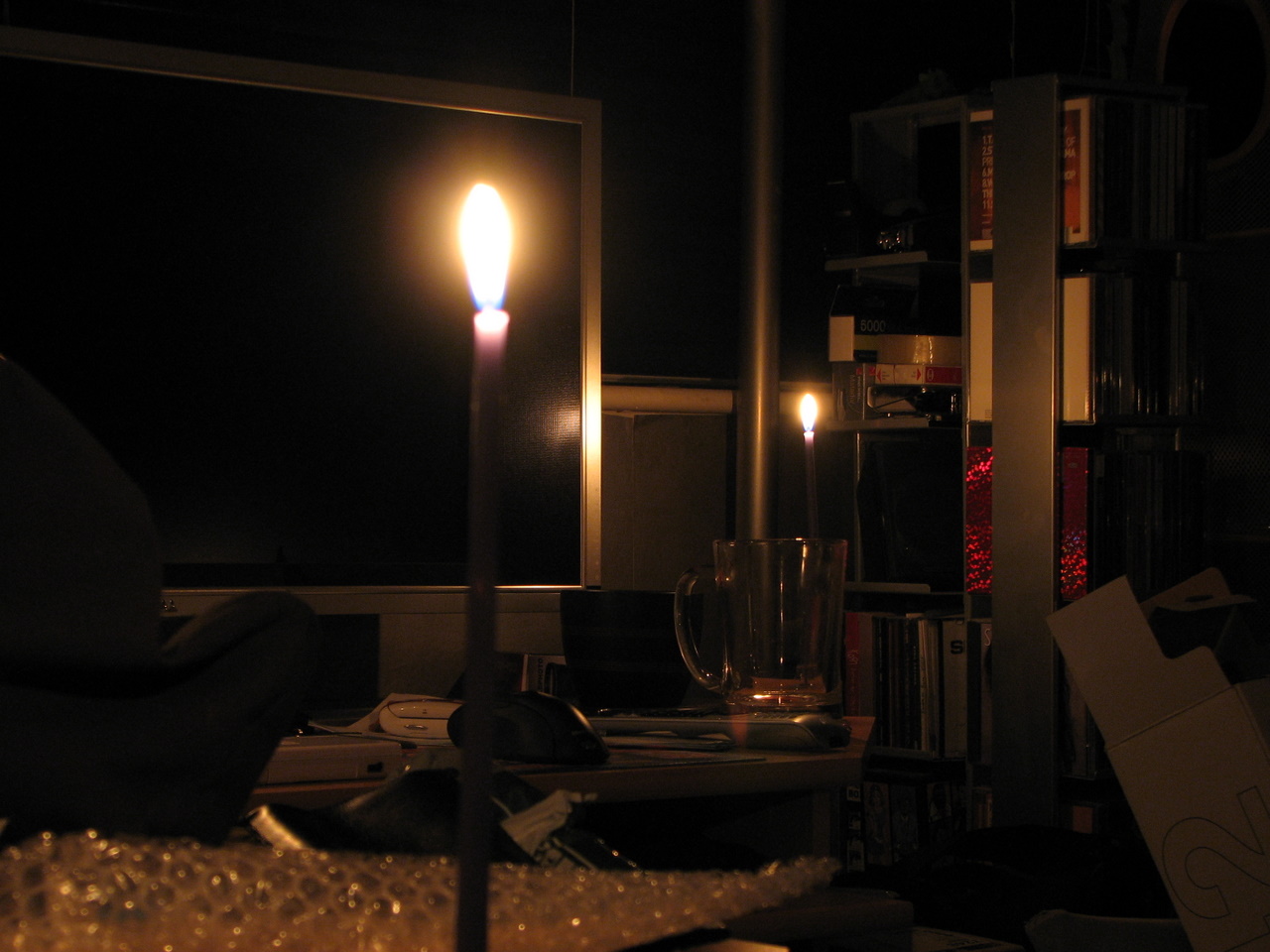
My week without power

(Photo: flickr.com courtesy Creative Commons)

Photo: flickr.com courtesy Creative Commons

A final-year student homeowner struggling to pay my mortgage with a combination of student loans and dwindling savings, I’m always after ways to save money. I’m also environmentally responsible. With power bills both in the news and on the increase, the chance to go “off grid” for a week seems well timed.
My building doesn’t have gas so even hot water and heating are supplied electrically. At 5pm Friday I turn off my mains power. Except for a rechargeable battery bought on eBay for my laptop, to be used solely for university work, my electricity-free week’s commenced.
Friday evenings I usually unwind after a stressful week at university with some music, red wine and a ready meal before catching up on the week’s TV. After a particularly bad day the setting sun forces me to turn on two small battery-powered lamps a friend loaned me. With my battery-powered radio for entertainment I pour myself a glass of wine but this does little to improve my mood.
Despite the lamps’ light my flat’s still dark. I’m tired and listening to the radio in a gloomy flat, while trying to catch up on some recreational reading is not an especially relaxing end to a hard week. Apart from darkness, the most noticeable aspect is the silence. It’s amazing how used to the background hum of the fridge and other electronic devices you become and how much you miss them when they’re absent.
Already dreading tomorrow morning and the prospect of no hot water I decide I won’t subject myself to that particular ordeal. Therefore unless I make it to the gym I’ll just manage without.
Lacking the numerous electrical distractions I’m usually afforded via the TV, Internet and stereo, time so far seems to move more slowly: seconds become minutes, minutes become hours… you get the idea. This may be because the battery-operated living room clock seems much louder than usual but, I suspect, is more likely because I’m without the aforementioned devices.
Before bed as I clean my teeth with my electric toothbrush I realise I’ll need to buy a manual one tomorrow as the charge won’t last all week and this is something I can’t do without.
I’m delighted to see daylight the next morning. I still keep going to turn on lights as a matter of habit however and filled the kettle for my morning coffee before remembering I can’t boil it. Normally lazing about the flat until after midday, today I’m out the door before 11.
As the clocks go back that night, the following day my east-facing flat gets dark even earlier and, with a big storm due and temperatures expected to drop, I need encouragement.
I consider the energy I’m saving, an average of 11kWh over the week and decide to discuss this with an environmental campaign group like Friends of the Earth (FoE) who I expect will applaud my sacrifice. I’m in for a disappointment though.
“It’s a really laudable thing to go for,” agreed FoE energy campaigner Guy Shrubsole, after I explain how I’m living.
“Some of our work in the past has been more to do with encouraging micro-generation so people can have access to things like solar panels on their roofs, being able to install small-scale wind power and things like that.
“But we’ve mainly done work to allow people to try to sell that electricity back in to the grid so although there’s a greater degree of self-reliance, they’re not completely off-grid. People tend to struggle if they have to generate all their power themselves just for a domestic setting. So we’re much more supportive of opening up the market, the electricity sector, of giving power back to the people and decentralising power.”
He sees one of the biggest problems living this way is sheer impracticality, due to the amount of electricity generating equipment necessary to invest in capable of balancing out the differing highs and lows in both energy demand and supply. This equipment, as I’ve discovered from my online research, is not cheap. For even extremely basic kit, prices begin at over a thousand pounds. Proponents argue this eventually pays for itself, but if you’re on a tight budget how do you overcome this in the short-term?
“Some of the rates you can now get for the feed-in tariff [the money you receive for any excess power produced] for solar panel installation are still quite a good investment and something that’s being taken up by quite a lot of people around the country,” Mr Shrubsole said.
“But I think there’s a greater reluctance to do so because the government keep fiddling with the rates for it… and that’s obviously been very disruptive to the industry and disruptive to public uptake.”
As my week continues things don’t become easier. I begin to dread coming home to a flat that since Sunday night’s big storm and the end of BST, became noticeably colder and gloomier than before. I really miss my morning coffee and although I can go downstairs and across the road to a cafe it’s not the same. I’ve come dangerously close to cheating by using the computer battery to boil the kettle several times.
I’m already sick of washing my face in cold water every morning. It’s no substitute for a hot shower and I have too much work due to get to the gym even if it is only to wash. From the smell of my armpits I really should man up and use the face-washer to at least give them a clean. But if I’m suffering, anyone silly enough to get close to me with the miserable look now constantly on my face, deserves what they get.
From my window I jealously watch light warmly flicker through windows across the street. However even at the climax of my self-pity party I remember I at least have a choice. This is entirely voluntary. For hundreds of thousands of elderly, unemployed and low-earners forced to decide between paying their electricity bill or whether they eat, this must be truly depressing.
Arriving home Wednesday night, my flat’s really losing heat, forcing me to wear extra layers. Again I’m lucky – the cold weather’s barely begun and my triple glazing and modern building materials mean the flat’s hardly freezing, another reason for environmental groups like FoE’s shift away from self-sustainability.
“…even if they’ve not managed it entirely…they’ve been mostly satisfied but perhaps in equal measures frustrated at the difficulties in doing so. We don’t think it’s necessarily viable for a large percentage of the population…,” says Mr Shrubsole, referring to attempts to live off-grid.
“We’re much more interested in promoting the sustainability of the whole system we’ve got in the UK. Whether that means retrofitting housing with better insulation, which is a really vital thing we need to be doing or powering the country with cleaner energy from large scale and community level renewables.”
My own powerless week drags on. I really need to try to get to the gym for a shower later as I’m starting to gross myself out now and just feel dirty. Not in a nice way either.
Even in daylight, as nice as it is to see where everything is, my normally tidy flat resembles a tip – there’s stuff everywhere. I need to consider doing dishes, a chore, that with a dishwasher, I haven’t done for ages. I’m putting utensils in the sink but they’re piling up and starting to smell almost as badly as I do.
I didn’t need to hear this morning’s weather forecast to know last night was autumn’s coldest so far. I dreamt about blankets and woke up shivering. I really am sick of being cold.
That night switching on my two battery powered friends, I realize why I squinted more than usual attempting to read the paper the previous evening after finishing my studies. There’s a circle of less than three inches of dim light beneath each – I need new batteries.
The extra light makes me feel (a little!) better already. Now if only I’d had the money or foresight to have obtained a battery-powered heater but the winter duvet’s on now so I won’t dream of bedding tonight.
With two nights left, I’m counting the minutes until this nightmare is over. Even now I still futilely attempt to turn on lights whenever I enter a room. I’m forced to take these wretched lamps everywhere even the toilet and the batteries keep coming loose. I’m itchy, miserable and fantasize about the long hot shower I’ll have to scrub the filth off myself, the clean sheets I’ll sleep in and the heating on full-power while I open half a bottle of red and eat a hot meal naked in front of the TV. Tonight it’s cold (ish) chicken and salad again.
It’s also Halloween and if any kid dares knock on my door they’ll be told in no uncertain terms where they can put their Snickers. Roll on Friday.

Mobile technology in advertising: the best is yet to come

Photo: pixabay.com courtesy Creative Commons)

Photo: pixabay.com courtesy Creative Commons

Jon Mew interview for C21 Media

Jon Mew, the Internet Advertising Bureau’s director of mobile says mobile technology, already used in revolutionary new ways to increase sales, continues to be developed, its real marketing capabilities not yet realized. He also feels lifting limitations caused by present trading barriers like tax and charges would further increase the potential opportunities created by Tech City.

Mad about mobiles

(Photo: outlish.com courtesy Creative Commons)

Photo: outlish.com courtesy Creative Commons

Doug Grinspan interview for C21 Media

Users of mobile phones are becoming addicted to their handsets, claims Doug Grinspan mobile publisher for Global Solutions and Say Media. He explains the ways we now depend on them not merely for sharing information and communicating, but also innovative other uses when we are alone. Grinspan reveals what he feels this relationship will mean for advertisers and publishers.

Why technology is irrelevant

(Photo: en.wikipedia.org courtesy Creative Commons)

Photo: en.wikipedia.org courtesy Creative Commons

Phil Teer interview for C21 Media

Phil Teer, partner and strategy director at Brothers and Sisters, believes now technology is everywhere this makes it virtually irrelevant. Therefore, he feels it becomes more of a tool to help people tell stories and involve them more fully with content and the mobile phone’s geolocation feature could also help change their idea of what they will consider ‘local’.

Is careers guidance in England still working?

(Photo: linkedin.com courtesy Creative Commons)

(Photo: linkedin.com courtesy Creative Commons)

It once consisted of little more than a brief chat with the head or health and social care tutor in the final year of secondary school. During this, you would be told whether you should apply for university or, for the less academically able, not to waste your time and find a trade. Perhaps some work experience was even arranged, usually a week sitting in your Dad’s office where his secretary made a fuss and you made tea and did the photocopying.
Thankfully most readers won’t recognize this description, because of how much career guidance has changed for the better over the decades. Now degree-qualified professionals with years of training, careers advisers are government funded to work with both adults and young people.
Recently however, career guidance in England experienced dramatic changes. Like most of the public sector, the economic downturn meant cuts to budgets and therefore, the services available. Unlike other Government cuts to essential services such as policing, nursing or teaching, (career guidance is also a statutory right), this received little or no media attention.
“It’s careers guidance and I think the most important part is the guidance,” says Shaunagh Gwynn a London careers adviser with 26 years experience. “Lots of people have ideas of what they want to do but aren’t sure how to achieve it. When they seek help from non-professionals, say friends and family, the approach is: ‘I think you should do this’. When they come to careers guidance practitioners, it’s guidance – more a discussion: ‘You’re thinking about doing this, how do you think you’ll achieve it?’ It’s a conversation, taking them through how they achieve that goal. As part of career guidance quality standards, practitioners follow certain principles and work to those.”
Ms Gwynn is south London district manager for the National Careers Service (NCS), the publicly funded service for adults and young people (aged 13 and over). This appears to cover everyone but as will become clear this is not the case. Launched in April 2012, the NCS is only one of many major changes the Coalition’s pushed through since coming to power.
This worries David Milton, the Institute of Career Guidance (ICG) President, the UK’s largest professional body for the sector: “I’m particularly concerned about changes in England… in Scotland, Wales and Northern Ireland you still have a central government dimension to the provision of careers guidance. The significant thing that happened in England is the central duty to provide free guidance was transferred to schools, so the change is more dramatic.”
One senior manager with 18 years careers guidance experience working with youngsters in schools and sixth forms is scathing about the changes. Preferring to remain anonymous, M says: “This Government gave schools the power to employ their own careers advisers. That means they don’t have to come to a local authority (LA) careers service like us, what was the old Connexions careers service, or a private company… as a result you have more competition in the market but much less regulation. I would say [young people’s] careers guidance in the last two years, since the massive public sector cuts, is virtually non-existent throughout England.
“LAs have a duty to provide a [careers guidance] service to the most vulnerable. That’s wide open to interpretation and each LA is interpreting that in different ways. Some just employ special needs advisers to look after youngsters with special educational needs…it doesn’t mean their NEETs (not in employment education training) are being looked after, nor anyone else either.”
Because of the new duty placed on schools to provide career guidance, the Education Select Committee undertook an inquiry into careers guidance for young people in 2012 due out late January 2013. The duty on schools only started in September so the Select Committee deciding to instigate the inquiry before that duty was underway, suggests even Government concerns about what could happen.
Now responsible for adult advisers, for 13 years Ms Gwynn worked with young people. She is also critical of NCS guidance provision for them: “The only thing they can do at the moment is webchat, look it up on the Internet… Adults have the opportunity to have that face-to-face conversation. I know young people are very much into the Internet but there’s nothing like a face-to-face interview.”
It wasn’t supposed to be like this, however. In 2010, Conservative MP John Hayes, when Minister for Further Education, Skills and Lifelong Learning, delivered an inspirational speech about developing an all-age careers service at that year’s ICG Conference.
“That was what we hoped for and it seemed to be Government intention,” says Mr Milton. “The NCS is only a partial service so what we’d like to see is an extension of this so it caters not just for adult support but also takes in 18 to 16 year olds and young people in schools. Obviously that means changing policy and funding regimes.”
With the young people’s guidance on offer now different from one LA to the next, M agrees: ” Every Year 11 has the right, regardless where they are, to a fully qualified careers adviser, not just someone…who isn’t properly qualified or part of the ICG. I also think there needs to be a real focus on NEET… there needs to be an all-age career service like they have in Scotland, Northern Ireland and Wales so the transition is seamless and we can cater for everybody.”
With youth unemployment still at record levels and the recession set to continue for the foreseeable future, it seems better career service provision is now needed more than ever. Although cuts to these services saves money, are the risks of creating a lost generation and the problems this would bring, simply false economy?