Circumcision: the cruelest cut?

The fact the barbaric practice of female genital mutilation (FGM) now receives so much media and political attention after being ignored for so long is to be applauded. Although this makes me angry and upsets me it’s also for another reason, however.

I cannot stress enough how wrong FGM is and how much I am opposed to it. To butcher a girl’s sexual organs for no other reason than preventing their sexual pleasure out of some twisted misogynistic terror of female sexuality is inexplicable. Most readers would agree.

What also makes me angry though is that so few people find anything wrong in allowing something similar to be done to billions of infant boys worldwide for religious or cultural reasons: circumcision. Although not nearly as brutal as FGM, as someone subjected to this as an infant for no medical reason and without my consent, I believe strongly there are some disturbing comparisons, however.

By both design and function the penis is one of the most sensitive parts of the male anatomy. Equipped with unique nerve endings compared to other parts of the body, one of its primary functions is providing enormous pleasure to its owner when stimulated.

A protective sheath of skin, the foreskin covers the glans, the tip and most sensitive part. During an erection the foreskin retracts partially or fully to expose the glans during sex or masturbation to maximise the sensations felt by its owner.

Practised prior to recorded history circumcision is apparently the world’s oldest surgical procedure. With no definitive origin for its introduction, one theory is it was used in war as a less brutal or fatal way of emasculating an enemy than castration. To me, that merely supports the argument that this is a barbaric practice.

Many millennia ago, some idiot decided “God” (it seems to always be His fault doesn’t it?) wanted them to cut the foreskin off male babies either immediately or soon after their birth or at the onset of puberty. After the procedure, although the penis looks the same when erect and can perform the same function it is not. Part of it, a very important part, is missing.

Every major medical body worldwide, including the BMA, is divided on the benefits and disadvantages of circumcision and therefore the subsequent ethical issues surrounding its practice. I can testify myself, as no doubt can billions of other circumcised men, my penis still functions properly, providing me with enormous pleasure. Although there is no way to prove this definitively, according to many doctors however, a considerable degree of the sensation is lost after the procedure. There are many reasons for this.

Unlike the umbilical cord the foreskin is not merely a redundant body part but performs vital functions in its own right. Comprised of a double layer of skin containing muscle tissue, a mucous membrane and millions of nerve endings, when it’s cut off these are therefore also removed. The foreskin acts as a protective sheath and the exterior skin is a continuation of the penis. The interior, however, contains a delicate mucous membrane keeping the highly sensitive glans slightly moist in a similar way the inside of the eyelid moistens the eye. It can retract in a similar way, preventing exposure except during arousal in preparation for the sexual act and, possibly, depending on the person, when urinating.

After circumcision the delicate area of skin at the penis’ head is now constantly exposed, something it wasn’t meant to do, constantly chafing 24/7 against clothing. Without the mucous membrane, the body compensates as a result. The usually moist skin of the penis’ head soon dries out, becoming cauterised and toughening, thereby reducing much of the former sensitivity.

There are some medical arguments in favour of circumcision.

Some men are born with certain penile abnormalities that means sex for them is painful or even impossible due to a tight foreskin. In these cases, circumcisions are medically recommended. Circumcision is also the most effective treatment for certain infections.

There is even some inconclusive evidence, of a reduction in penile cancer and many sexually transmitted diseases, most notably HIV. There have been subsequent arguments for routine circumcision of high-risk populations such as amongst gay men and men in sub-Saharan Africa. However, as circumcision is no guarantee against infection, with many circumcised men globally still becoming HIV Positive, the only real protection against the virus is the practise of safe sex.

As already admitted, in my own case everything downstairs is still working. Indeed, sex is one of my favourite activities and from my own experience, which of course is all I’ve ever known, the way it feels is incomparable. I find it impossible to even imagine how good this would feel if it were increased. If I had only been left the way nature intended, I wouldn’t need to try imagining though.

I’m not angry with my parents: they were only following standard procedure in my native Australia at the time I was born. Thankfully, things there have changed over time though. The view of the Royal Australasian College of Physicians has now changed making the child’s “best interests” paramount. Unless medically necessary, despite evidence supporting reduction of possible medical complications later in life, this can be seen to favour giving the patient, not their parents, that decision when they are old enough to be able to make it. In today’s supposedly more enlightened society, my anger comes from the fact an irreversible decision is taken for billions of children before they can do so themselves.

I have no objection to anyone doing anything they wish to with their own bodies. I do in fact know one or two people who have been circumcised as adults purely because they like the way a circumcised penis looks or have converted to Islam or Judaism. That is their choice. In the same way any adult who wants to get their penis pierced is also free to do so.

It is simply not fair however to carry out what is currently an irreversible and, in my opinion, unnecessary, medical procedure with permanent consequences on children who are not yet able to offer any objection.

Although not suffering to this degree myself, some men are sufficiently traumatised to join support groups. If even one person feels the necessity to do this, let alone many hundreds of thousands, surely it is now time in 2020 for us to end this barbaric practice -except of course when medically necessary or when the individual can legally make this choice for himself after he turns 18.

Commuter rage

SLPLogo

Dinosaurs

Dinosaurs burst free to take over station

Commuters at Waterloo Station were diverted from their usual journeys travelling to another world.

A large crate mysteriously appeared this month on the station concourse with stickers warning: Danger! Predatory Livestock – Trained Handlers Only.

Train travellers found the container had “burst open”, releasing its cargo of four ferocious velociraptors.

Continue Reading…

Final Year Print Project

You don’t expect a former cab driver who, but for poor eyesight would be a pilot to be running an award-winning interior supplies business specialising in unique surface materials. However, that’s not the only thing that sets Fameed Khalique apart from others in the crowded, competitive interiors market…

Read more.

The Mindfulness Revolution

(Photo: flickr.com courtesy Creative Commons)

(Photo: flickr.com courtesy Creative Commons)

The Wall Street Journal recently claimed mindfulness-based meditation’s health benefits were limited. However with mindfulness recently on Time’s front-cover, and Mindfulness Apps available for mobiles, this apparently contradicts other publications and many people’s experience.

Adrian Rides, mindfulness practitioner and teacher for over 10 years based at The Now Project, describes mindfulness as a meditative way of observing your own thoughts while still fully engaged in daily activities: “It’s about waking up – being as alert, alive as possible to this moment so your attention is 100% in the present. When you do that, something happens: your thinking quietens – it creates a quiet space called thoughtless awareness…,

“Accessing thoughtless awareness allows you to engage fully – free of the dialogue in your head. For many people that dialogue’s not altogether comfortable and it could be downright destructive and painful. So to be able to consciously choose to step out of the dialogue in your head’s quite a nice ability to have.”

Doing this without judging or trying to change your thoughts you discover nearly all your emotional discomfort – guilt, fear, anger etc., proponents claim. This isn’t caused because of what’s really happening but by our own thoughts. Once you see this you can decide to just withdraw your attention from the discomfort. Because you wouldn’t choose to be in discomfort, things change and you begin to feel better.

Medical News Today criticised limited research supporting The Wall Street Journal’s and similar articles, downplaying mindfulness’ benefits. That doctor believes the medical profession must update its awareness of the benefits mindfulness based therapy offers.

Paul Vallins, a client of Mr Rides agrees. A cocaine addict for ten years, he’s been clean for seven – something he attributes to mindfulness.

“It’s a completely different reality I’m living in,” he says.

“It takes practice. It’s difficult. Your mind doesn’t want to give up. There’s the ego in the pain body you must deal with. The ego’s your false sense of self… who you think you are.

“I was in a lot of pain then so at first practising was easy for me because there was no way out and that happens to lots of people I find. You take mindfulness on, it comes from a place of: they need to surrender.”

Mr Vallins now has a roofing business and teaches mindfulness himself. Mindfulness continues growing in popularity – even MPs take mindfulness classes in Westminster. It seems anyone really can benefit.

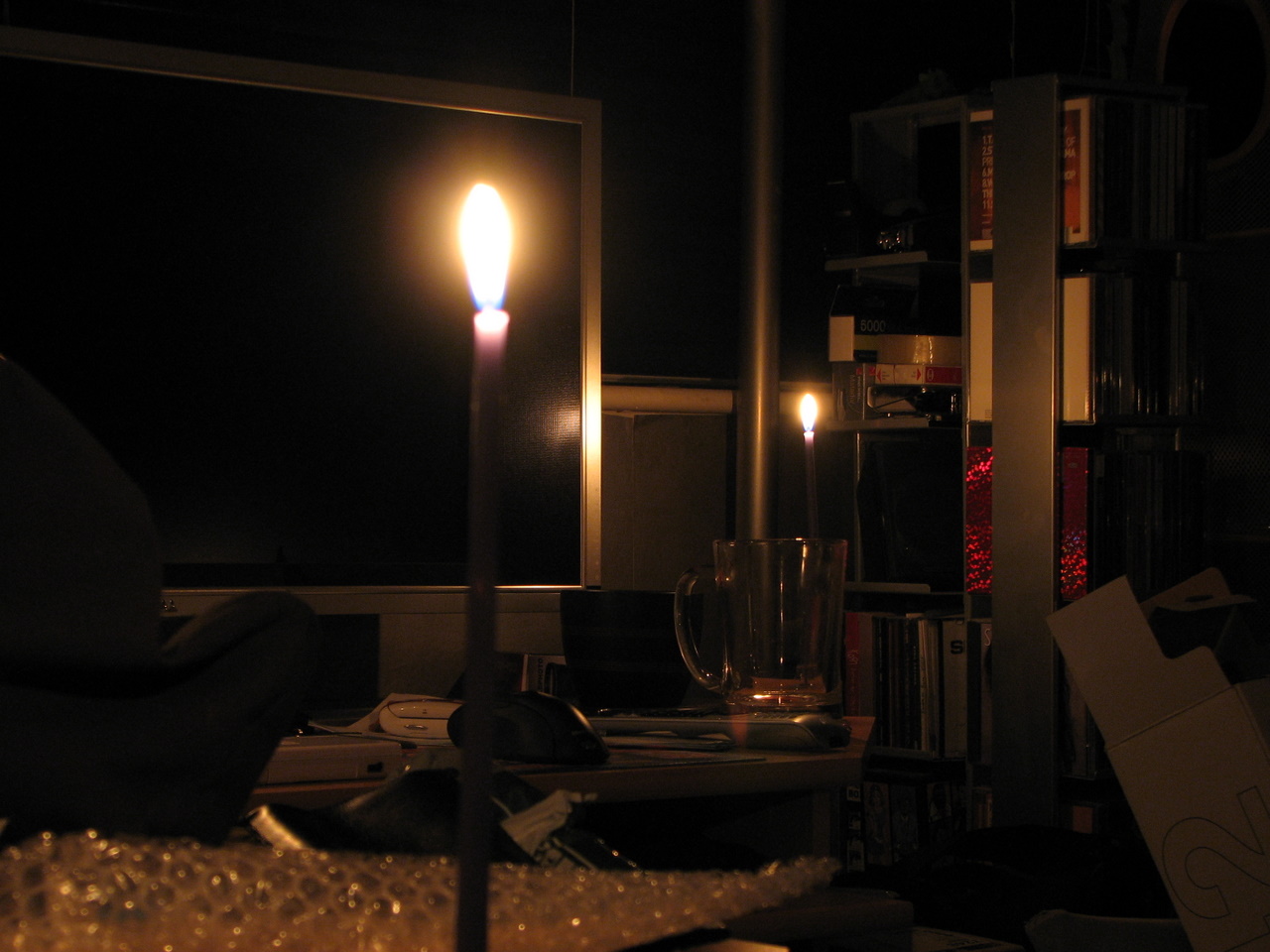
My week without power

(Photo: flickr.com courtesy Creative Commons)

Photo: flickr.com courtesy Creative Commons

A final-year student homeowner struggling to pay my mortgage with a combination of student loans and dwindling savings, I’m always after ways to save money. I’m also environmentally responsible. With power bills both in the news and on the increase, the chance to go “off grid” for a week seems well timed.
My building doesn’t have gas so even hot water and heating are supplied electrically. At 5pm Friday I turn off my mains power. Except for a rechargeable battery bought on eBay for my laptop, to be used solely for university work, my electricity-free week’s commenced.
Friday evenings I usually unwind after a stressful week at university with some music, red wine and a ready meal before catching up on the week’s TV. After a particularly bad day the setting sun forces me to turn on two small battery-powered lamps a friend loaned me. With my battery-powered radio for entertainment I pour myself a glass of wine but this does little to improve my mood.
Despite the lamps’ light my flat’s still dark. I’m tired and listening to the radio in a gloomy flat, while trying to catch up on some recreational reading is not an especially relaxing end to a hard week. Apart from darkness, the most noticeable aspect is the silence. It’s amazing how used to the background hum of the fridge and other electronic devices you become and how much you miss them when they’re absent.
Already dreading tomorrow morning and the prospect of no hot water I decide I won’t subject myself to that particular ordeal. Therefore unless I make it to the gym I’ll just manage without.
Lacking the numerous electrical distractions I’m usually afforded via the TV, Internet and stereo, time so far seems to move more slowly: seconds become minutes, minutes become hours… you get the idea. This may be because the battery-operated living room clock seems much louder than usual but, I suspect, is more likely because I’m without the aforementioned devices.
Before bed as I clean my teeth with my electric toothbrush I realise I’ll need to buy a manual one tomorrow as the charge won’t last all week and this is something I can’t do without.
I’m delighted to see daylight the next morning. I still keep going to turn on lights as a matter of habit however and filled the kettle for my morning coffee before remembering I can’t boil it. Normally lazing about the flat until after midday, today I’m out the door before 11.
As the clocks go back that night, the following day my east-facing flat gets dark even earlier and, with a big storm due and temperatures expected to drop, I need encouragement.
I consider the energy I’m saving, an average of 11kWh over the week and decide to discuss this with an environmental campaign group like Friends of the Earth (FoE) who I expect will applaud my sacrifice. I’m in for a disappointment though.
“It’s a really laudable thing to go for,” agreed FoE energy campaigner Guy Shrubsole, after I explain how I’m living.
“Some of our work in the past has been more to do with encouraging micro-generation so people can have access to things like solar panels on their roofs, being able to install small-scale wind power and things like that.
“But we’ve mainly done work to allow people to try to sell that electricity back in to the grid so although there’s a greater degree of self-reliance, they’re not completely off-grid. People tend to struggle if they have to generate all their power themselves just for a domestic setting. So we’re much more supportive of opening up the market, the electricity sector, of giving power back to the people and decentralising power.”
He sees one of the biggest problems living this way is sheer impracticality, due to the amount of electricity generating equipment necessary to invest in capable of balancing out the differing highs and lows in both energy demand and supply. This equipment, as I’ve discovered from my online research, is not cheap. For even extremely basic kit, prices begin at over a thousand pounds. Proponents argue this eventually pays for itself, but if you’re on a tight budget how do you overcome this in the short-term?
“Some of the rates you can now get for the feed-in tariff [the money you receive for any excess power produced] for solar panel installation are still quite a good investment and something that’s being taken up by quite a lot of people around the country,” Mr Shrubsole said.
“But I think there’s a greater reluctance to do so because the government keep fiddling with the rates for it… and that’s obviously been very disruptive to the industry and disruptive to public uptake.”
As my week continues things don’t become easier. I begin to dread coming home to a flat that since Sunday night’s big storm and the end of BST, became noticeably colder and gloomier than before. I really miss my morning coffee and although I can go downstairs and across the road to a cafe it’s not the same. I’ve come dangerously close to cheating by using the computer battery to boil the kettle several times.
I’m already sick of washing my face in cold water every morning. It’s no substitute for a hot shower and I have too much work due to get to the gym even if it is only to wash. From the smell of my armpits I really should man up and use the face-washer to at least give them a clean. But if I’m suffering, anyone silly enough to get close to me with the miserable look now constantly on my face, deserves what they get.
From my window I jealously watch light warmly flicker through windows across the street. However even at the climax of my self-pity party I remember I at least have a choice. This is entirely voluntary. For hundreds of thousands of elderly, unemployed and low-earners forced to decide between paying their electricity bill or whether they eat, this must be truly depressing.
Arriving home Wednesday night, my flat’s really losing heat, forcing me to wear extra layers. Again I’m lucky – the cold weather’s barely begun and my triple glazing and modern building materials mean the flat’s hardly freezing, another reason for environmental groups like FoE’s shift away from self-sustainability.
“…even if they’ve not managed it entirely…they’ve been mostly satisfied but perhaps in equal measures frustrated at the difficulties in doing so. We don’t think it’s necessarily viable for a large percentage of the population…,” says Mr Shrubsole, referring to attempts to live off-grid.
“We’re much more interested in promoting the sustainability of the whole system we’ve got in the UK. Whether that means retrofitting housing with better insulation, which is a really vital thing we need to be doing or powering the country with cleaner energy from large scale and community level renewables.”
My own powerless week drags on. I really need to try to get to the gym for a shower later as I’m starting to gross myself out now and just feel dirty. Not in a nice way either.
Even in daylight, as nice as it is to see where everything is, my normally tidy flat resembles a tip – there’s stuff everywhere. I need to consider doing dishes, a chore, that with a dishwasher, I haven’t done for ages. I’m putting utensils in the sink but they’re piling up and starting to smell almost as badly as I do.
I didn’t need to hear this morning’s weather forecast to know last night was autumn’s coldest so far. I dreamt about blankets and woke up shivering. I really am sick of being cold.
That night switching on my two battery powered friends, I realize why I squinted more than usual attempting to read the paper the previous evening after finishing my studies. There’s a circle of less than three inches of dim light beneath each – I need new batteries.
The extra light makes me feel (a little!) better already. Now if only I’d had the money or foresight to have obtained a battery-powered heater but the winter duvet’s on now so I won’t dream of bedding tonight.
With two nights left, I’m counting the minutes until this nightmare is over. Even now I still futilely attempt to turn on lights whenever I enter a room. I’m forced to take these wretched lamps everywhere even the toilet and the batteries keep coming loose. I’m itchy, miserable and fantasize about the long hot shower I’ll have to scrub the filth off myself, the clean sheets I’ll sleep in and the heating on full-power while I open half a bottle of red and eat a hot meal naked in front of the TV. Tonight it’s cold (ish) chicken and salad again.
It’s also Halloween and if any kid dares knock on my door they’ll be told in no uncertain terms where they can put their Snickers. Roll on Friday.

Hackney Council housing chief to be scrutinised

(Photo: flickr.com courtesy Creative Commons)

(Photo: flickr.com courtesy Creative Commons)

The Hackney Councillor responsible for housing will be questioned at Hackney Town Hall about housing issues important to Hoxton residents.

Prior to national changes to social housing and the way homes are built, Labour Councillor Philip Glanville will face concerns about housing issues affecting Hoxton, during a debate on 25 October open to Hackney residents.

Topics, including the Decent Homes programme, estates maintenance and how the social housing waiting list will be tackled, are to be addressed at a town hall Question Time with Council housing chiefs.

Labour Councillor Clayeon McKenzie, in charge of the debate, said: “Social housing reform is progressing quickly and it’s important the Council guarantees the best possible outcomes for residents.”

Although the debate is open to the public and the Council wants to hear residents’ views or concerns, it is not a public debate however.

“Residents who want to play a more active part in the event should contact the Overview and Scrutiny Team in advance on 0208 356 3341 with any questions they wish to ask,” said Grace Douglas, Hackney Council’s Press Officer.

“As cabinet remits are wide, to keep discussion manageable it was agreed for the Overview & Scrutiny Board to focus on three specific areas.”

This will be the Council’s third Question Time Debate. The format was introduced to help the Council improve openness and accountability on areas of special public interest. Previous debates focused on finance, social care and voluntary sector support, with debates on other areas planned for later this year.

Is careers guidance in England still working?

(Photo: linkedin.com courtesy Creative Commons)

(Photo: linkedin.com courtesy Creative Commons)

It once consisted of little more than a brief chat with the head or health and social care tutor in the final year of secondary school. During this, you would be told whether you should apply for university or, for the less academically able, not to waste your time and find a trade. Perhaps some work experience was even arranged, usually a week sitting in your Dad’s office where his secretary made a fuss and you made tea and did the photocopying.
Thankfully most readers won’t recognize this description, because of how much career guidance has changed for the better over the decades. Now degree-qualified professionals with years of training, careers advisers are government funded to work with both adults and young people.
Recently however, career guidance in England experienced dramatic changes. Like most of the public sector, the economic downturn meant cuts to budgets and therefore, the services available. Unlike other Government cuts to essential services such as policing, nursing or teaching, (career guidance is also a statutory right), this received little or no media attention.
“It’s careers guidance and I think the most important part is the guidance,” says Shaunagh Gwynn a London careers adviser with 26 years experience. “Lots of people have ideas of what they want to do but aren’t sure how to achieve it. When they seek help from non-professionals, say friends and family, the approach is: ‘I think you should do this’. When they come to careers guidance practitioners, it’s guidance – more a discussion: ‘You’re thinking about doing this, how do you think you’ll achieve it?’ It’s a conversation, taking them through how they achieve that goal. As part of career guidance quality standards, practitioners follow certain principles and work to those.”
Ms Gwynn is south London district manager for the National Careers Service (NCS), the publicly funded service for adults and young people (aged 13 and over). This appears to cover everyone but as will become clear this is not the case. Launched in April 2012, the NCS is only one of many major changes the Coalition’s pushed through since coming to power.
This worries David Milton, the Institute of Career Guidance (ICG) President, the UK’s largest professional body for the sector: “I’m particularly concerned about changes in England… in Scotland, Wales and Northern Ireland you still have a central government dimension to the provision of careers guidance. The significant thing that happened in England is the central duty to provide free guidance was transferred to schools, so the change is more dramatic.”
One senior manager with 18 years careers guidance experience working with youngsters in schools and sixth forms is scathing about the changes. Preferring to remain anonymous, M says: “This Government gave schools the power to employ their own careers advisers. That means they don’t have to come to a local authority (LA) careers service like us, what was the old Connexions careers service, or a private company… as a result you have more competition in the market but much less regulation. I would say [young people’s] careers guidance in the last two years, since the massive public sector cuts, is virtually non-existent throughout England.
“LAs have a duty to provide a [careers guidance] service to the most vulnerable. That’s wide open to interpretation and each LA is interpreting that in different ways. Some just employ special needs advisers to look after youngsters with special educational needs…it doesn’t mean their NEETs (not in employment education training) are being looked after, nor anyone else either.”
Because of the new duty placed on schools to provide career guidance, the Education Select Committee undertook an inquiry into careers guidance for young people in 2012 due out late January 2013. The duty on schools only started in September so the Select Committee deciding to instigate the inquiry before that duty was underway, suggests even Government concerns about what could happen.
Now responsible for adult advisers, for 13 years Ms Gwynn worked with young people. She is also critical of NCS guidance provision for them: “The only thing they can do at the moment is webchat, look it up on the Internet… Adults have the opportunity to have that face-to-face conversation. I know young people are very much into the Internet but there’s nothing like a face-to-face interview.”
It wasn’t supposed to be like this, however. In 2010, Conservative MP John Hayes, when Minister for Further Education, Skills and Lifelong Learning, delivered an inspirational speech about developing an all-age careers service at that year’s ICG Conference.
“That was what we hoped for and it seemed to be Government intention,” says Mr Milton. “The NCS is only a partial service so what we’d like to see is an extension of this so it caters not just for adult support but also takes in 18 to 16 year olds and young people in schools. Obviously that means changing policy and funding regimes.”
With the young people’s guidance on offer now different from one LA to the next, M agrees: ” Every Year 11 has the right, regardless where they are, to a fully qualified careers adviser, not just someone…who isn’t properly qualified or part of the ICG. I also think there needs to be a real focus on NEET… there needs to be an all-age career service like they have in Scotland, Northern Ireland and Wales so the transition is seamless and we can cater for everybody.”
With youth unemployment still at record levels and the recession set to continue for the foreseeable future, it seems better career service provision is now needed more than ever. Although cuts to these services saves money, are the risks of creating a lost generation and the problems this would bring, simply false economy?

Promising artist’s new show opens

Chan Sick Head

An award winning young artist’s new exhibition, inspired by dreams and events in the paper, opened at a gallery near Farringdon Station Wednesday. With London’s old jewelry district in nearby Hatton Gardens, other than Leather Lane’s street market, Tintype is surrounded almost exclusively by jewelry and related businesses.

The Back of Your Head, is 25 year-old An Gee Chan’s second show at Tintype, since graduating from the Royal College of Art last year.

Teresa Grimes, one of Tintype’s directors, said: “An Gee’s got a very fresh vision. I’ve never met an artist so completely unaffected by the art world.

It’s rare to meet someone who’s just doing their own thing. She reminds me of Keith Haring or [Jean Michel] Basquiat.”

Born in Hong Kong, much of Ms Chan’s work is autobiographical and she’s started working in different mediums, developing her style.

“There’s two oil paintings in the show and she’s never used oils before plus she’s taught herself to make pots so there’s some ceramics,” explained Ms Grimes.

“She’s experimenting all the time. I suspect that’s going to continue.”

Tintype offer an annual solo show to recent art school graduates. Ms Chan exhibited last year when the gallery was in Shoreditch.

“It was amazing. We were so impressed we wanted to work with her again,” said Ms Grimes.

Chosen as Artist of the Day at London’s prestigious Flowers Gallery, Tintype clearly aren’t Ms Ghee’s only admirers.