A House far from home…

There are two ways to enter House, one of many restaurants, bars and cafés on offer to National Theatre visitors. Squeezed on the first floor of the labyrinthine complex, one entrance is via the theatre building itself.

The other entrance is up a flight of almost invisible stairs on the building’s river side. As these are right next to another bar or restaurant, one whose name, unsurprisingly, I can’t remember as it undoubtedly also plays (no pun intended – honest!) with theatrical terms – The Terrace, Understudy, The Green Room… you get the idea – making things confusing to first time diners. Regrettably, confusion seems to be House’s main theme.

I’m all for clever names to reflect restaurant location. However, I also expect these to give at least some idea of the food or some semblance of how you will feel inside. In this respect, “House” does neither.

House, for me, conjures up images of comfort food and family favourites. Dishes such as stews, roasts, puddings and the like not the haute cuisine chef Polis Butkus is clearly offering.

Décor, if you can call it that, consists of a bar running through half the restaurant, garlanded above with what can politely be described as cheap plastic flowers. The bar is surrounded on two sides by a single row of chairs and tables pressed up against a wall with pendulum lights above each. Though not at all in keeping with either the style of furniture, the National’s listed brutalist architectural style and certainly not with the fluorescent bulbs as art on the restaurant’s river side which I was lucky enough to face, they are vital due to a lack of illumination throughout.

Art on the walls could attempt to show the restaurant wasn’t merely positioned here simply to fill space. Unfortunately, a few faded screen prints of old Shakespearian style maps of London and the Thames chosen by whoever decorated – a term I use very loosely – House fail to do the trick and merely continue to confuse.

If at this point diners hope to be given any indication of what exactly they will be eating from the menu, those illusions are shattered by the hodgepodge list of dishes driving diners down dizzying dietary destinations – Italy to Asia via Southwest England. No, I’m not exaggerating.

Even the bill is inconsistent: the average price for starters are a reasonable £9; sides are about £4 but mains are a wallet busting £20. Nor does the fixed menu, usually the cheaper option, achieve its goal: standing at £24 for two courses and £28.50 for three.

This is all a real shame because although most of the menu continues to confuse, all the food I ate was extremely good.

Although I have an adventurous palate, I was nonetheless baffled and a little overwhelmed by the menu choices, and so had difficulty deciding. Starters such as: cured mackerel and paté, grapes, treacle and fennel bread, contrasted with mains: rump cap, marmite butter, gratin and ox crumble. It all left my culinary curiosity a tad overwhelmed.

Nonetheless I dived in and began with Portland crab dumpling bisque. The bisque, though a little tepid for my taste, was excellent. A light foam of seafood in the midst of which swam four perfectly cooked jiaozi, their soft light pastry dyed black with squid ink, contrasting beautifully with the pale pink bisque and stuffed full of minced seasoned crab. Plated to perfection, this was garnished with pale crunchy parsnip crisps giving a wonderful change in texture to the lightness of the bisque and pillow like softness of the dumplings.

I decided to be more adventurous with my main, settling on the confit wild rabbit leg and loin, pasty, wild garlic and courgette purée, beans. I was intrigued. Largely as the menu gave no further detail. My waiter, who must have noticed me struggling to choose but still left me none the wiser. Would the entire dish come in a pasty? Would I be given some rabbit, a pasty filled with beans, all of this covered in puréed courgette? Who knew? My menu gave nothing away when a few words of description would have been warmly welcomed.

Once again, the food was excellent, in terms of both presentation and taste. Several slices of meat were arranged on a timbale mash of red beans, a bright green pool of wild garlic and courgette puree with a miniature bite sized pasty complete with a root vegetable and meat stuffing encased in flaky shortcrust pastry on the side.

The rabbit was slow cooked to melt in the mouth perfection, lightly seasoned with thyme, complimenting the delicately flavoured beans, subtle pasty filling, all magically marrying with the wild garlic and courgette purée. No component overpowered another. Even my side: a green salad, was exceptional. Mixed leaves with slices of dill pickle all dressed in a light but flavoursome herb vinaigrette.

With food this good and talented, imaginative cooking clearly apparent, surely a creative hub like the National could spare a writer or two to add a brief line of description to dishes on the menu? Similarly, with the talented set designers on offer here with minimum thought this place could be a real gem. Simply binning the plastic flowers and improving the art and lighting would help enormously. As would a name change.

If the National insists on theatre themed venues the food I tasted here was much more: “Dress Circle” or “Royal Box” than “House”.

Instead of wanting to give House a standing ovation, it just gave me a headache. I left bewildered as to why a venue lucky enough to benefit from the cooking of a chef as talented as Polis Butkus clearly is, has been left in the shoddy state it has and even more curious, in a semi-masochistic way, as to what exactly: mackerel, treacle, fennel and paté really would taste like…

Attenborough shows The Hunt is on in BBC1’s newest nature programme

The Hunt, BBC Natural History Unit’s latest animal extravaganza began on BBC1 Sunday night.

Like the wildlife he discusses, David Attenborough proves again he is master of his own skill – narration, building tension as carefully and cleverly as his subjects stalk prey. Despite yourself you discover you are soon rooting for the leopard and feel her frustration as an impala hunt ends in failure.

leopard_stalking

Image courtesy: flickr.com via Creative Commons

From larger mainland African predators to the island wildlife haven of Madagascar, focus shifts swiftly to chameleons as easily as these tiny reptiles’ eyes move in different directions but becomes no less absorbing. Attenborough is equally sympathetic to predator as he is to prey explaining the enormous odds they must overcome simply to sustain themselves and their young with food.

As wonderful as Attenborough is however, it’s the wildlife that are the real celebrities and so the skills of countless professionals behind the scenes who spend many months working to bring these stunning struggles into our front rooms. From a small spider in Madagascar spinning silk stronger than steel into a two-metre web, to a cheetah on the African plains: it all makes for riveting television.

Anyone who doubts the BBC’s relevance and importance as a public service terrestrial broadcaster in today’s turbulent digital landscape needs only watch this to be convinced otherwise. This is what the Corporation was designed to do and does better than its rivals.

Engaging, informative, entertaining, with unrivalled production values, it settles the license fee argument firmly in the BBC’s favour.

Grain Store Unleashed to close end of July

The-Staff-Canteen-logo

Highly acclaimed boutique hotel chain The Zetter Group, have announced the temporary restaurant from Bruno Loubet, Grain Store Unleashed will close its doors on the 31st July 2015.

Bruno Loubet’s temporary pop-up restaurant will then function as a light and airy dining space as an all-day cafe and restaurant for hotel guests and the public from breakfast until late. However, watch this space for a brand new concept coming soon.

Continue reading…

10 minutes with: Mark Moriarty, San Pellegrino Young Chef of The Year 2015

The-Staff-Canteen-logo

With so many well-known chefs born there and such a popular tourist destination it’s somewhat surprising Ireland still has no restaurants in the world’s top 50.
The Staff Canteen talked to Mark Moriarty, 23 year-old winner of San Pellegrino’s prestigious Young Chef of The Year 2015 who vowed: if it’s up to him, that’s going to change.

Continue reading…

Orson’s Shadow: Southwark Playhouse

The Orson’s Shadow programme Introduction by playwright Austin Pendleton explains little is known about his play’s true story.

This is the potentially fascinating meeting between two titans of stage and screen, Orson Welles and Laurence Olivier, to discuss Welles directing Olivier in Ionesco’s Rhinoceros at London’s Royal Court.

Set during a tremendously turbulent time in Olivier’s personal life and, with Vivien Leigh and Joan Playwright central characters it should be theatrical heaven. Unfortunately it isn’t, at least not in Southwark Playhouse’s production. I doubt this play would work anywhere.

John Hodgkinson physically fits Welles but there any resemblance ends. Although assistant Sean (Ciaran O’Brien) was far better, well-played and amusingly gormless, this is taken too far under Alice Hamilton’s clumsy direction.

The dialogue’s filled with obscure film references, which from most of the audiences’ reaction, or lack of any, miss their mark. Jokes about Welles’ weight were more obvious but equally unfunny. Theatrical superstition equates Macbeth with bad-luck so perhaps this play shouldn’t mention it so early on.

After a half-hour, I was still unsure where this was going. Welles wallows in self-pity taking fading fame out on poor Sean, by now a one-joke wonder.

The scene with Olivier was better; Adrian Lukas captures his clipped consonants. Louise Ford gives a strong performance as Plowright and it was interesting to see their relationship before they marry but by their reactions the audience were still confused. One potentially poignant scene discussing Olivier’s son is squandered as an excuse for another unfunny attempt to amuse.

The action finally begins when Edward Bennet as arch critic Kenneth Tynan arrives. Both Olivier and Welles share grudges against him, albeit for separate slights. This also causes a further rift in Joan and Larry’s complicated relationship.

Any progress though is destroyed with the entrance of Gina Bellman’s appalling Vivien Leigh whose attempt at ice-cool glamour is at best a little girl playing dress-up. At her most paranoid and coping with the horrors of Leigh’s manic-depression the scene between Olivier and Leigh should bring brilliance but lacked any of the vulnerability required by Bellman. Confused, convoluted, much of the blame rests with the awkward direction, though awful lighting and milking every joke for all it’s worth doesn’t help.

The second act’s tighter but Hodgkinson’s accent, which was barely mid-Atlantic has been completely lost at sea.

When the long-awaited confrontation between Welles and Olivier finally comes everyone’s too confused and/or bored to care. Like poor put-upon Sean by now the audience has endured plenty of punishment. Although we’ll probably never know, would Olivier really put up with the abuse he gets from Welles? The scene between the two goes on forever.

More Marilyn Monroe than Vivien Leigh, Bellman steals every starlet stereotype imaginable: big dark glasses, full-length fur, stilettos – you could forgive the two-dimensional costume if her acting wasn’t so one-dimensional. The scene between her and Welles is embarrassing.

An interesting story, this could have been brilliant but sadly like the play it purports to portray, too many obstacles stop it ever coming together. The principal’s are caricatures and too much detail’s forced in.

The sub-plot about Tynan’s health, although a big part of the critic’s own story adds little to the play and seems tacked on. Yes the breath is probably an actor’s most important instrument but I doubt many in the audience care. I certainly didn’t.

Welles bellows: “We need to reach a decision about who’s directing it, that’s the problem!” I know how he feels.

Capital car chargers

One of Source London's new EV charging points (Photo: Rob Whitson)

One of Source London’s new EV charging point (Photo: Rob Whitson)

London’s electrical vehicle charging point upgrade is long overdue

Despite a Zone 1 address I still, understandably, object to the sound of workers cutting concrete on the street outside, especially when trying to work myself, but not today.

Impatiently leaving my desk to discover what’s causing the nerve shredding noise nearby, any anger soon subsided: paving stones were being cut for a new electric vehicle (EV) charging point.

One of many now being installed across Southwark and Sutton, it replaces an existing point that, like many across the capital, was often out-of-order and so stood unused across both boroughs.

In September 2014 BluepointLondon Ltd. became operator of Source London, the company responsible for management and maintenance of the city’s EV charging point network. Southwark and Sutton are the first boroughs benefiting from a long-overdue, citywide upgrade, when Transport for London then agreed a new deal due to the network’s previously poor record.

BluepointLondon this week signed identical agreements with other London Boroughs: Kensington and Chelsea, Hackney and Greenwich, making them directly responsible for a quarter of all London’s charging points. More seem certain to follow.

Living centrally and not a driver, I never understood why I haven’t seen more motorists capitalising on the benefits of EV ownership. In addition to low fuel costs, vehicle tax and congestion charge exemptions, EVs are now cheaper with more models than ever available. It was only researching this article I discovered the staggering statistics to explain the poor take-up.

Apparently, one of the main reasons London and British drivers do not buy an EV when choosing a new car is: charging point unavailability. There are now a mere 1,400 charging points across all of London and of these, around a third aren’t working.

On most journeys, existing EV owners are usually forced to fall back on fossil fuel their cars carry for the same reason. So not wanting to buy an EV becomes more understandable.

As more cars are built with EV capability despite this, due to EU environmental legislation, Source plans to increase the number of charging points fourfold to 6,000.

Existing points, like the one outside my window, are being replaced with a more advanced and, supposedly, reliable version. Connected centrally via computer, any future faults will automatically be reported and a 24-hour team ensuring these are quickly resolved.

This all reaffirms BluePointLondon’s goal: “encouraging EV uptake by improving and expanding London’s charging point infrastructure. ”

Of course, only time will tell.

Games people play

Stephen Mangan in Rules for Living (Photo: Creative Commons)

Stephen Mangan in Rules for Living (Photo: Creative Commons)

Onstage at The National, breaking life’s rules has never been so entertaining

The Rules For Living in Sam Holcroft’s eponymous new play are literal, in director Marianne Elliott’s superb in-the-round production for The National.

Scoreboards reveal each principal character’s name soon after he or she enters, assigning various rules for which they receive points whenever these are completed. Extremely funny to watch, these thinly mask the many insecurities each suffer, that can’t help but appear during what deteriorates into the ultimate dysfunctional family reunion.

Two brothers have returned to the family home for Christmas with their respective partners.

Mild-mannered lawyer Matthew, marvellously underplayed by Miles Jupp, is first to arrive.

Maggie Service plays Matthew’s girlfriend Carrie, an archetypal actress and his polar opposite. Determined to be centre of attention the minute she enters, Service is hysterical in every sense.

Soon joined by Matthew’s sister-in-law Sheena, a measured, controlled Claudie Blakely, who, we already heard, Carrie possibly offended off-stage with one of her numerous unfunny inappropriate jokes.

Sheena is soon shown as an advocate for every alternative health-trend imagined, especially when it comes to daughter Emma, recuperating upstairs from some unnamed ailment.

Her husband, Matthew’s brother Adam, arrives from his mission for cranberry sauce. Adam, an ebullient but sarcastic Stephen Mangan is also a lawyer but contrasts completely with his quieter brother.

Skeletons in the very large family closet earlier hinted at, slowly begin emerging as each character is introduced and the various rules revealed.

The unceremonious announcement of Matthew’s recent promotion, by the ever-tactless Carrie, signals sibling rivalry to surface.

Sheena explains her and Adam’s, still unseen daughter Daisy is undergoing cognitive behavioural therapy and these “rules for living” help her overcome insecurities, undoubtedly caused mainly by her parents.

Adam and Matthew’s mother Edith, the domineering demanding Deborah Findlay, finally enters, seeking the perfect Christmas for their hospitalised Father.

The family get-together turns military operation and existing tensions increase even further. It’s quickly clear where most of the brothers’ problems originate but any dissent is soon silenced with: “Darling, it’s Christmas,” Edith’s answer to everything.

It’s revealed both boys entered law to please their parents with quiet Matthew, surprisingly, once training as an actor and Adam hoping for fame as a professional cricketer.

John Rogan is father Francis, a retired judge, who, we’ve learnt, is nicknamed: “The General”. A womanising family tyrant, he finally arrives from hospital as Act One ends, a shadow of his former self.

The “Christmas from Hell” theme continues after interval with the scoreboard rules for each character becoming increasingly complicated and funny. More skeletons tumble out and relationships start to crumble.

Between: teetotal hypochondriac Sheena, drinking her weight in wine: Edith’s obsessive cleaning and self-medicating; Carrie’s appalling and literal stand-up comedy; Matthew’s over-eating and lying, and Stephen’s self-pity and sarcasm, The Priory wouldn’t know where to start.

Without revealing too much the climax comes over Christmas lunch as any remaining veneer of family decorum evaporates. Young Daisy Waterstone as sick daughter Emma, finally arrives from bed to reveal mentally she’s the most mature member of the lot.

EXCLUSIVE: Interview with Green Party Deputy Leader Amelia Womack

1966935_594269970650012_157568431_n


Can the long-termist Greens win a general election sprint?

Rupert Murdoch’s electoral edict to The Sun’s editorial staff: keep Miliband out of Downing Street or risk their jobs was unsurprising. Far more interesting was the lack of effect this, or anything in mainstream media, had on polls. The old: “It Was The Sun Wot Won It” days are over.

Continue Reading…

Difficult dining in Merton

IMG_0666

For Sunday lunch The William Morris Riverside’s location passes with flying colours but food and service fails miserably.


Like most visitors, coming via the hectic A24 and A36 junction, our hopes weren’t high. On arrival however, William Morris’ Riverside Merton’s an hidden oasis. Tucked-away from traffic mere minutes away, it’s walled-in by Wandle River’s willows.

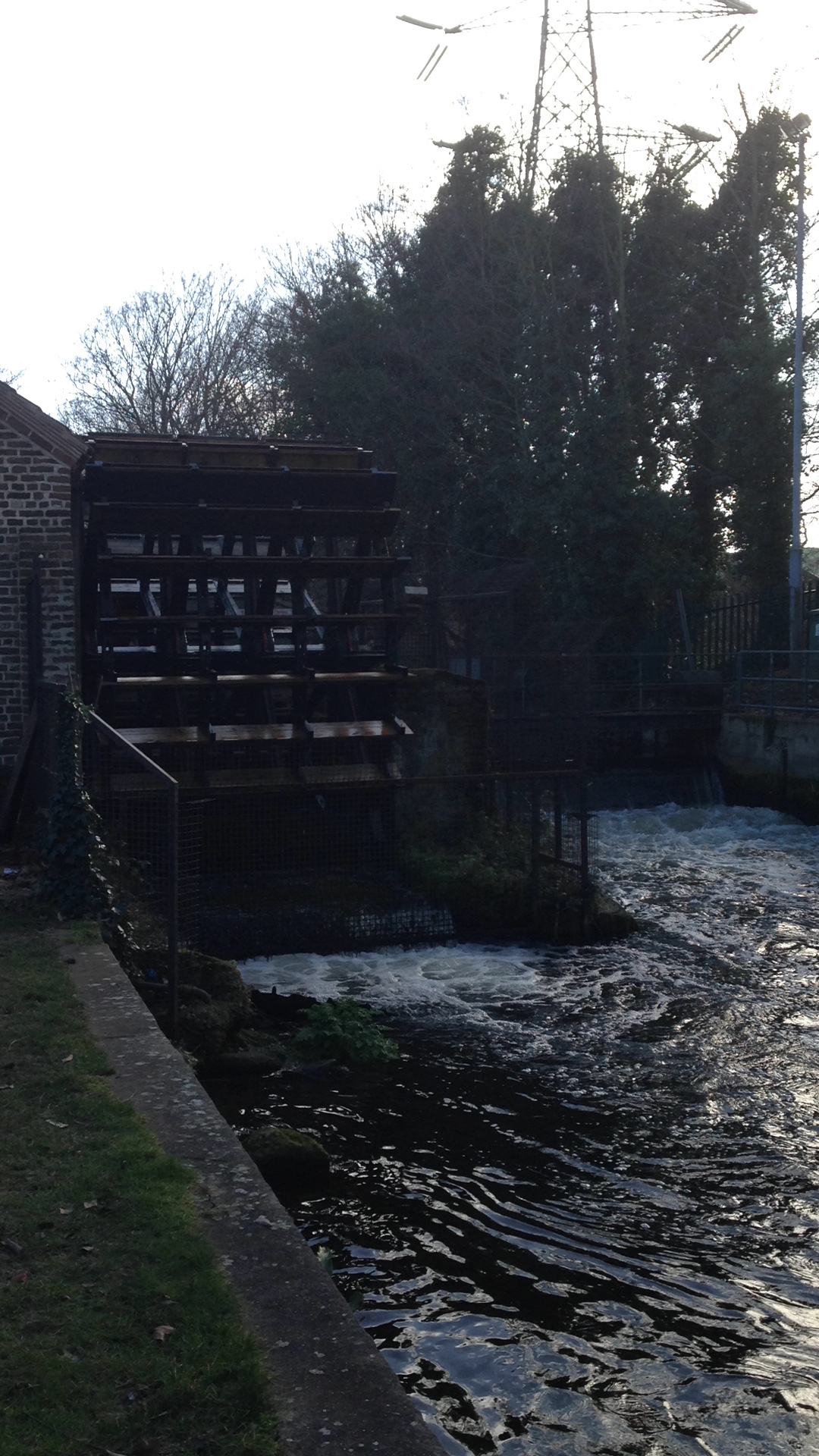
Abbey Mills’ craft stalls, eateries and open-air entertainment complete the illusion, providing a pleasant day out, even on a chilly early-spring Sunday. Unfortunately too cold to enjoy their perfectly placed river-terrace balcony, we opted to eat indoors. My English companion anticipated the enticing Traditional Sunday Roast scribbled on the sandwich board outside.

Entering, despite the delightful decor, exposed brickwork and an abundance of dark-wood, the missing manager to meet us reduced our expectations. Appearances really are deceiving. There were blackboards – each listing what we assumed were different specials. Maybe they were going for an academic theme and we were meant to memorise these? Ahead lay the bar, which wasn’t too busy. From his manner the barman seemed to be in charge. After my friend politely explained we wanted to eat in the restaurant any friendly pub illusion vanished entirely.

“Just a minute,” he snapped, simultaneously pulling pints for nearby guests. Another waiter/barman, we couldn’t tell, scurried around busily behind him. Through the bar we could clearly see the crowded conservatory-style restaurant and the Wandle winding past.

Maybe I’d misread the blackboard boast, but I’m sure the “Vision”, said: “…most welcoming pub”; “…friendliest staff”. I’ve checked the website and wasn’t wrong. “MOST” is capitalised.

We decided to seated ourselves. The corner table near a door to the river looked empty and once seated, after pinching a chair from another table, I could see Abbey Mills eponymous waterwheel. At least the view looked lovely.

Sadly, last year’s Christmas lights still stayed strung round the room by masking tape. Available for functions, perhaps they were last night’s? It was still a pity, more because they highlighted the place’s poor paintwork. Must try harder, I thought. The worried waiter was certainly trying, hurrying by several times in five minutes.

Having done my homework, I thought I’d try the lamb shanks with mustard mash on one of the many blackboards after I checked what else was available on our missing menus when they arrived.

Eventually my eagle-eyed companion spotted a pile on the bar, hidden amongst glasses and preserve jars – possibly for last night’s candles? I have no answer for the ever-increasing pile of glasses. There were no restaurant blackboards for specials, they were by the door but I guess if you’d studied hard you wouldn’t need them. No cheating now.

Retrieving two, our original barman/waiter spotted him and yelled he’d be over soon but as his tone was the only snappy thing he possessed we waited  a lot longer. The worried waiter, almost as distressed as his black jeans, tried to tackle ten tables, plus help his boss/co-worker and the kitchen.

Another waitress/barmaid appeared at the restaurant’s far end but we never saw her again. Was she looking after the Family Area? We knew one existed having heard children and noting when entering, yet another blackboard above an empty door frame helpfully marking it. No clues to the door’s location, or why several still reasonably behaved children sat in the main restaurant.

Needing a nibble, we studied our menus seeing the selection of roasts at the top, just as the stressed server brought two sizable servings of roast chicken to the wrong table. He placed both on the bar and disappeared, while I reconsidered my choice.

As it approached 2pm, the promising Riverside Sunday Roast Menu confused us. Maybe we got extra marks working this out? Following Roasts, Start with… featured: soup of the day; bread; olives; and dips. Beneath, Bar bites… with: chips; onion rings; a strange gap; chips with truffle oil; then nachos. A long list of Mains… drifted into the next column.

Deciding to try chips with truffle oil, sea salt and Parmesan with our drinks, the brusque barman eventually arrived so we also ordered our meal, as we didn’t know when he’d return. We’d confused him and he grew increasingly impatient.

“No, chips and truffle oil to start, not as a side, with our drinks,” I explained slowly teaching him his menu.

“They’re not a side are they?” my friend asked.

As they never arrived, we never found out. Brusque barman, he never introduced himself, disappeared. The glasses grew higher. We weren’t alone in our irritation as other guests began to lose patience.

After over 15 minutes our drinks arrived. I had apple juice and my friend a cider. Just as well we didn’t want wine – we never saw a wine list. It’s a good thing we weren’t overly thirsty either, that was the only drink we were offered all afternoon.

I’ve looked online. The wine list is short but soundly stocked with reasonable prices. Again unnecessarily complicated, especially for staff, there are three glass sizes instead of just two. Were staff being tested too? From their faces it certainly seemed so.

Employing three clearly untrained waiters to cover over ten tables, another dining room and double as barmen is unrealistic. This is management’s responsibility and it’s greed not economy. Even without a more expensive restaurant manager, a relatively inexpensive weekend barman would solve most of this place’s problems promptly.

Over 30 minutes after sitting, starters appeared. We were famished. Rolls and butter would help a busy kitchen during what must be one of the Riverside’s busiest days.

I’d ordered soup of the day – meant to be mushroom it wasn’t. Containing a considerable quantity of mushrooms, the thick brown liquid surrounding them looked and tasted suspiciously of onion gravy. My friend, tasting it, agreed. I left over half.

His hummus, taramasalata and grilled bread was passable but hummus looked though it was left out uncovered overnight. It was merely mashed chickpeas: there wasn’t enough olive oil and no garlic kick. Taramasalata was tasty but too watery. When, eventually, our starters were cleared, no one asked how they were or why we’d left most of them.

20 minutes later the meaty mains arrived doing a detour to two vegetarians at an adjacent table, one of who wasn’t eating.

Plentiful portions seemed more because the chef tossed everything on the plates quickly. Yes it was pub fare but a little food presentation doesn’t hurt. Salt and pepper would have helped.

My “tender” lamb shank” was not. I cook these often, one reason I’d ordered it. Lamb should fall off the bone. This was overcooked and my suspicions about the onion gravy earlier were confirmed when I tasted what covered it. The mustard mash was lumpy and dry, with far too much mustard. The red cabbage OK, but I don’t really like red cabbage and it wasn’t mentioned.

My friend’s roast beef passed. Thankfully he likes his well done as he wasn’t asked how he liked it cooked. The roast potatoes were good but carrots overcooked too and despite the proclamation: “all roasts come with traditional trimmings”, there was no Yorkshire pudding. He ate his meat and potatoes leaving most of the rest eating some of my red cabbage, which he enjoys.

Not wanting dessert, at nearly 3.30pm we requested the bill, watching children now as restless as their poor parents starting to run around the restaurant. What’s the point of a Family Dining Area we wondered? An outside play area is difficult by a river but, if it features good fencing and used only with accompanying adults, it’s not impossible.

The vegetarian and her companion explained to the waiter/barman in jeans they needed to go soon. Apologising for the delay, he offered them a complimentary drink. Why weren’t we offered anything we wondered? In the bar area the TV came on for the football. I don’t mind football in pubs but if the restaurant plays music couldn’t the volume be off?

The bill, when it arrived, was reasonable. £42.05 after we’d deducted £3.50 for the missing chips with truffle oil. There was no service in every sense. By now we were keen to leave but our waiter, the snappy barman, asked if everything was OK.

“Not really,” I answered honestly but politely.

“Why?” he snapped back as if I’d insulted him personally.

Listing our grievances, my friend suggested they needed more staff.

“Ha!” he laughed, “Try telling my manager that!”

Our lesson was complete.

The William Morris Riverside

20 Watermill Way

London SW19 2RD

Ph: 020 8540 0216

Food served Monday to Saturday 12pm – 9pm Sunday

Lunch for two, without wine or desserts £42 without service

Rating: 2 out of 5