Commuter rage

SLPLogo

Dinosaurs

Dinosaurs burst free to take over station

Commuters at Waterloo Station were diverted from their usual journeys travelling to another world.

A large crate mysteriously appeared this month on the station concourse with stickers warning: Danger! Predatory Livestock – Trained Handlers Only.

Train travellers found the container had “burst open”, releasing its cargo of four ferocious velociraptors.

Continue Reading…

Death of A Salesman: Noel Coward Theatre

Sam Marks, Harriet Walter, Antony Sher and Alex Hassell (Image: Creative Commons)

Sam Marks, Harriet Walter, Antony Sher and Alex Hassell (Image: Creative Commons)

Even before Antony Sher first shuffles onstage as Willy Loman Brooklyn never looked bleaker. The fatigue found throughout Miller’s melancholy masterpiece seems to spill off the stage in Gregory Doran’s brilliant production for the RSC.

Sher is superb as Loman. Trapped like a hamster on the wheel of a life which, although he may hate, he’s also hooked. He hopes for another hit of the adrenaline it once offered – a junkie whose fix no longer works.

Returning home from another unsuccessful sales trip to Linda, his ever-patient wife, (played perfectly by Harriet Walter), he wants to immediately escape again. Although, as she accurately observes, Willy’s mind is indeed “overactive”, it’s also worn out.

Demanding she open something in the tiny kitchen, she explains the windows are open.

“Bricks and windows. Windows and Bricks,” is Willy’s reply. Summing up his state of mind, it should be his motto, helped enormously by designer Stephen Brimson Lewis’ cleverly cramped set, complemented by Tim Mitchell’s evocative lighting.

The world has changed and Willy’s a relic clinging to the familiar, but Biff his eldest son is a disappointment. His hope of leaving a Loman legacy, Biff (Alec Hassell, the all-American athlete) refuses to play the part his father’s cast him in.

Youngest son Happy also lacks purpose: “I don’t know what the hell I’m working for.” Sam Marks captures Hap’s easy charm who, despite grabbing girl after girl, is lonely. Biff isn’t interested in money but, like his father, that’s Hap’s only measure of success – that and women. Even casual conquests lose their thrill though, now an easy way to compensate for his business inferiority.

Willy switches between past and present like others change radio stations. This makes processing the present even harder, reminding him of unfulfilled promises.

In one flashback, warned by Biff’s neighbour and classmate Bernard, a nerdy Brodie Ross, about Biff’s lack of exam preparation, Willy laughs it off announcing to both his boys: “Be liked and you will never want.”

To him, being liked is everything so, seeking an answer for his current state, Willy is drawn increasingly to Biff’s high-school glory-days.

Neighbour Charley’s (Joshua Richards) gruff realism is unfathomable to Willy. His dead brother Ben (Guy Paul) drifts on and offstage like smoke and Willy begs him to stay, seeking his big brother’s approval as reassurance.

Where Willy is obsessed with other’s opinions, Biff couldn’t care less: “I hate this city,” he screams at Linda.

One thing Willy is incapable of is listening. To him image is everything. The flat, falling to pieces around him, is analogous for his state of mind and current situation.

Charley, despite his frivolity understands the need to concentrate on what’s possible.

When the brother’s business plan fails following Biff’s rejection, he and Hap wake from the dream their father ‘s trapped them both in for 15 years.

Only Willy refuses to, until the past pushes into the present. Forced to face his greatest failure the play is brought to its heart-breaking climax.

Capital car chargers

One of Source London's new EV charging points (Photo: Rob Whitson)

One of Source London’s new EV charging point (Photo: Rob Whitson)

London’s electrical vehicle charging point upgrade is long overdue

Despite a Zone 1 address I still, understandably, object to the sound of workers cutting concrete on the street outside, especially when trying to work myself, but not today.

Impatiently leaving my desk to discover what’s causing the nerve shredding noise nearby, any anger soon subsided: paving stones were being cut for a new electric vehicle (EV) charging point.

One of many now being installed across Southwark and Sutton, it replaces an existing point that, like many across the capital, was often out-of-order and so stood unused across both boroughs.

In September 2014 BluepointLondon Ltd. became operator of Source London, the company responsible for management and maintenance of the city’s EV charging point network. Southwark and Sutton are the first boroughs benefiting from a long-overdue, citywide upgrade, when Transport for London then agreed a new deal due to the network’s previously poor record.

BluepointLondon this week signed identical agreements with other London Boroughs: Kensington and Chelsea, Hackney and Greenwich, making them directly responsible for a quarter of all London’s charging points. More seem certain to follow.

Living centrally and not a driver, I never understood why I haven’t seen more motorists capitalising on the benefits of EV ownership. In addition to low fuel costs, vehicle tax and congestion charge exemptions, EVs are now cheaper with more models than ever available. It was only researching this article I discovered the staggering statistics to explain the poor take-up.

Apparently, one of the main reasons London and British drivers do not buy an EV when choosing a new car is: charging point unavailability. There are now a mere 1,400 charging points across all of London and of these, around a third aren’t working.

On most journeys, existing EV owners are usually forced to fall back on fossil fuel their cars carry for the same reason. So not wanting to buy an EV becomes more understandable.

As more cars are built with EV capability despite this, due to EU environmental legislation, Source plans to increase the number of charging points fourfold to 6,000.

Existing points, like the one outside my window, are being replaced with a more advanced and, supposedly, reliable version. Connected centrally via computer, any future faults will automatically be reported and a 24-hour team ensuring these are quickly resolved.

This all reaffirms BluePointLondon’s goal: “encouraging EV uptake by improving and expanding London’s charging point infrastructure. ”

Of course, only time will tell.

Games people play

Stephen Mangan in Rules for Living (Photo: Creative Commons)

Stephen Mangan in Rules for Living (Photo: Creative Commons)

Onstage at The National, breaking life’s rules has never been so entertaining

The Rules For Living in Sam Holcroft’s eponymous new play are literal, in director Marianne Elliott’s superb in-the-round production for The National.

Scoreboards reveal each principal character’s name soon after he or she enters, assigning various rules for which they receive points whenever these are completed. Extremely funny to watch, these thinly mask the many insecurities each suffer, that can’t help but appear during what deteriorates into the ultimate dysfunctional family reunion.

Two brothers have returned to the family home for Christmas with their respective partners.

Mild-mannered lawyer Matthew, marvellously underplayed by Miles Jupp, is first to arrive.

Maggie Service plays Matthew’s girlfriend Carrie, an archetypal actress and his polar opposite. Determined to be centre of attention the minute she enters, Service is hysterical in every sense.

Soon joined by Matthew’s sister-in-law Sheena, a measured, controlled Claudie Blakely, who, we already heard, Carrie possibly offended off-stage with one of her numerous unfunny inappropriate jokes.

Sheena is soon shown as an advocate for every alternative health-trend imagined, especially when it comes to daughter Emma, recuperating upstairs from some unnamed ailment.

Her husband, Matthew’s brother Adam, arrives from his mission for cranberry sauce. Adam, an ebullient but sarcastic Stephen Mangan is also a lawyer but contrasts completely with his quieter brother.

Skeletons in the very large family closet earlier hinted at, slowly begin emerging as each character is introduced and the various rules revealed.

The unceremonious announcement of Matthew’s recent promotion, by the ever-tactless Carrie, signals sibling rivalry to surface.

Sheena explains her and Adam’s, still unseen daughter Daisy is undergoing cognitive behavioural therapy and these “rules for living” help her overcome insecurities, undoubtedly caused mainly by her parents.

Adam and Matthew’s mother Edith, the domineering demanding Deborah Findlay, finally enters, seeking the perfect Christmas for their hospitalised Father.

The family get-together turns military operation and existing tensions increase even further. It’s quickly clear where most of the brothers’ problems originate but any dissent is soon silenced with: “Darling, it’s Christmas,” Edith’s answer to everything.

It’s revealed both boys entered law to please their parents with quiet Matthew, surprisingly, once training as an actor and Adam hoping for fame as a professional cricketer.

John Rogan is father Francis, a retired judge, who, we’ve learnt, is nicknamed: “The General”. A womanising family tyrant, he finally arrives from hospital as Act One ends, a shadow of his former self.

The “Christmas from Hell” theme continues after interval with the scoreboard rules for each character becoming increasingly complicated and funny. More skeletons tumble out and relationships start to crumble.

Between: teetotal hypochondriac Sheena, drinking her weight in wine: Edith’s obsessive cleaning and self-medicating; Carrie’s appalling and literal stand-up comedy; Matthew’s over-eating and lying, and Stephen’s self-pity and sarcasm, The Priory wouldn’t know where to start.

Without revealing too much the climax comes over Christmas lunch as any remaining veneer of family decorum evaporates. Young Daisy Waterstone as sick daughter Emma, finally arrives from bed to reveal mentally she’s the most mature member of the lot.

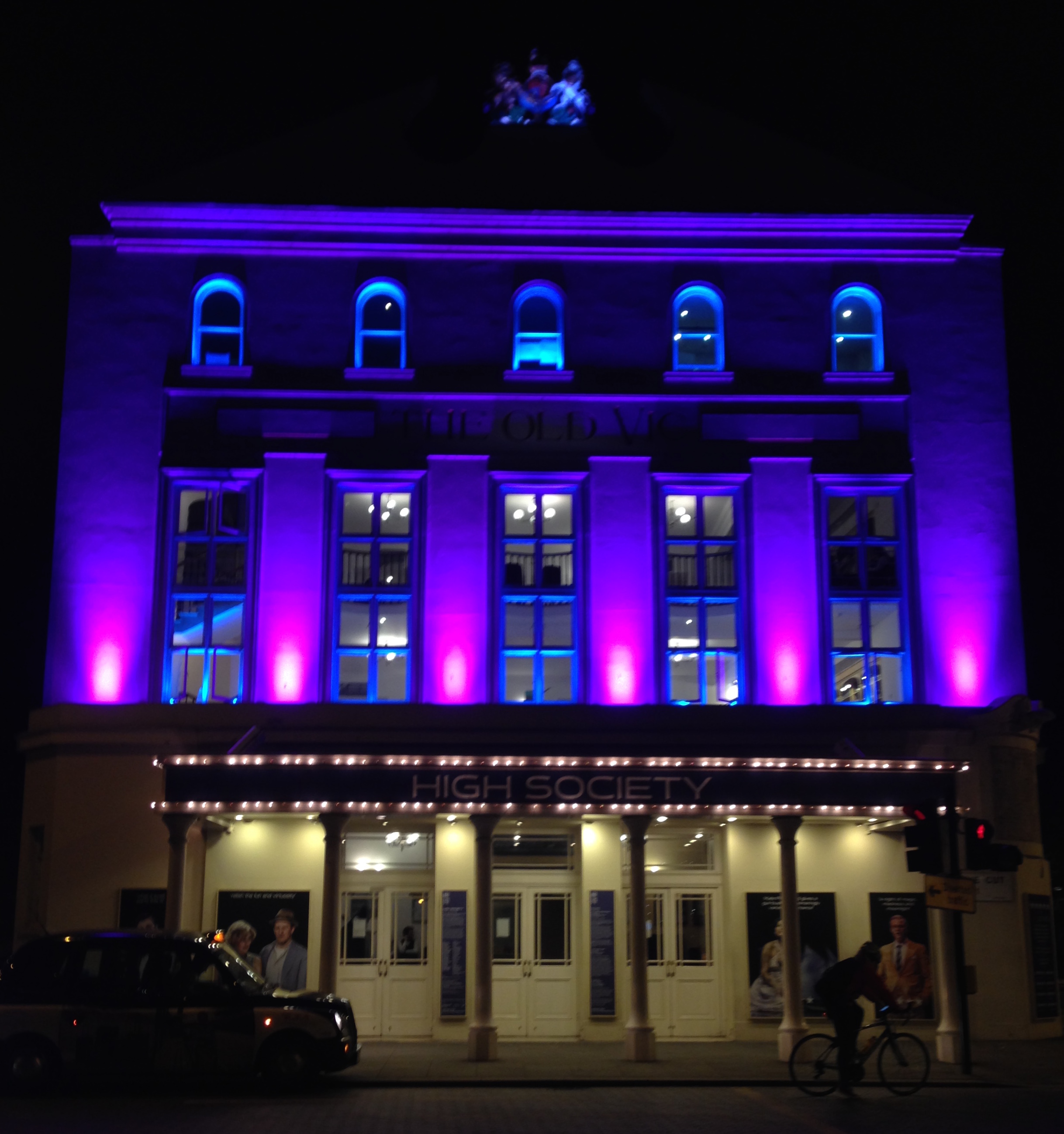
High Society: The Old Vic

IMG_1134

Some complain theatre, especially musical theatre, should not be performed in the round as it spoils the spectacle and so the show. These naysayers should see The Old Vic’s High Society.

Actors appear to blend with ushers, mingling with an unaware audience arriving to cross a stage, empty except for a piano, to take their seats. No lights lower when internationally renowned jazz pianist Joe Stilgoe (or is he Joey Powell?) seats himself, asking the audience for requests.

This could fail spectacularly, instead Powell’s/Stilgoe’s musical dexterity has everyone singing along to Night and Day. He and the cast segue seamlessly into Maria Friedman’s tightly directed show as houselights dim.

The chorus is superb: girls glide, boys bop and in a heartbeat we’re transported to Fifties East Coast America. The intimate production means actors are so close you can smell their cologne and perfume; the show’s slick set changes seamless.

Although you know Dexter (the brilliant Rupert Young) is trouble the minute you see him you forgive his foibles. True, it’s clearly corny but it’s completely captivating. Familiar songs feel fresh and fantastic – you can’t help singing along silently.

This is a musical about deception but the biggest con is on the audience who sit enraptured as both cast and crew charm with their creativity. Staging is sublime – it really is amazing the amount achieved in so small a space. A swimming pool appears on stage courtesy of Peter Mumford’s imaginative lighting.

Kate Fleetwood transfigures the audience, taking them thrillingly through Tracey Lord’s transformation from spoiled society snob to lovely lady.

Barbara Flynn’s performance as Mother Lord is pure Debbie Reynolds with Jeff Sprawle’s surprisingly spry Uncle Willy a wonderful comic foil.

George is played to perma-tanned perfection by Richard Grieve. His smarmy demeanour means you route for love-rival Dexter soon after George first enters.

Hailing from the wrong part of town, reporters Mike (Jamie Parker) and Liz (Annabel Scholey) are all brassy business, in their quest for a tabloid scoop.

Anyone who’s ever been in love and believes in second chances will fall head over heels for this, the perfect curtain call for Kevin Spacey’s stellar run as The Old Vic’s Artistic Director. A magnum of champagne should be raised in his honour.

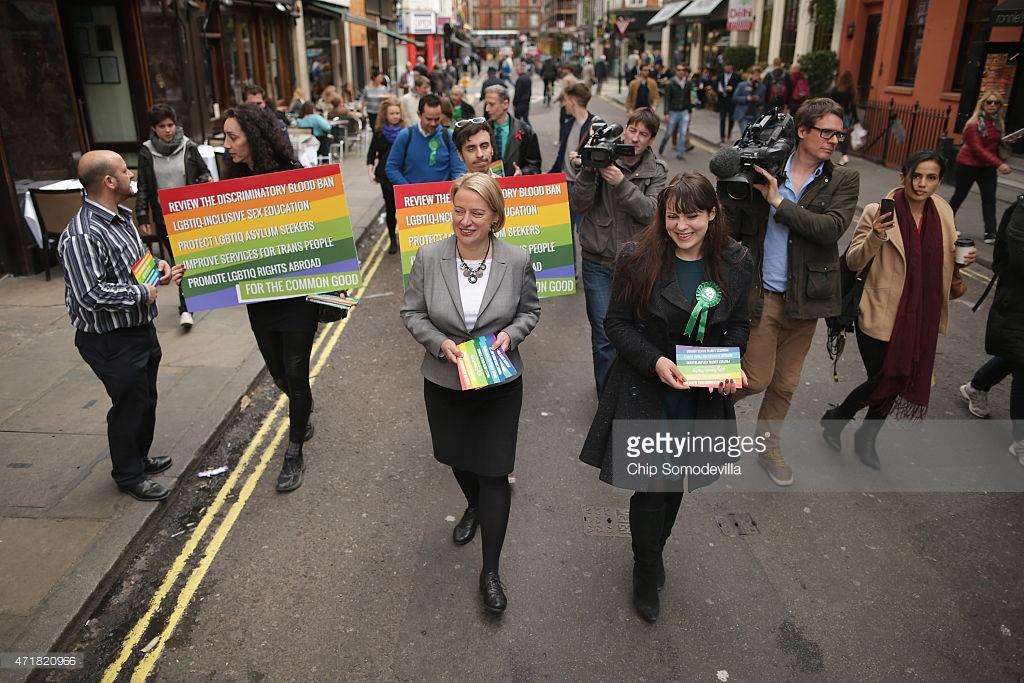
EXCLUSIVE: Interview with Green Party Deputy Leader Amelia Womack

1966935_594269970650012_157568431_n


Can the long-termist Greens win a general election sprint?

Rupert Murdoch’s electoral edict to The Sun’s editorial staff: keep Miliband out of Downing Street or risk their jobs was unsurprising. Far more interesting was the lack of effect this, or anything in mainstream media, had on polls. The old: “It Was The Sun Wot Won It” days are over.

Continue Reading…

Yes, cyclists matter – but so does everyone else

Photo: Creative Commons courtesy en.wikipedia.org

Photo: Creative Commons courtesy en.wikipedia.org

You don’t need to go far to see their staggering selfishness, especially in London. Pedestrians and motorists both suffer, watching in anger while these two-wheeled terrors casually weave in and out of traffic, ignoring signs, signals, riding over pedestrian bridges and jumping the kerb. Roads and footpaths belong to them – nobody else.

Disregarding everyone’s safety, including their own, they wear neither helmets nor high-visibility jackets. Lacking lights for dark days and evenings, often in dark clothing as if trying to deliberately remain unseen, the only reason they have reflectors is because these came attached.

The poor woman probably scarred for life recently, after a callous cyclist hit and run on a Bermondsey footpath may be extreme.

But when newspaper headlines shout about another tragic cycling death, sadly few readers admit much sympathy. With little detail, no blame is directed toward the fatally injured cyclist. Readers, although wishing nobody harm, often recall nothing except the recent recklessness they saw or experienced. These images come to mind, not the poor cyclist tragically killed. Subsequently many readers rarely bother continuing past the headlines.

Yes, millions of responsible cyclists do follow road rules, are considerate to those they share streets with and wear correct cycling clothing.

Millions of drivers show similar respect for road safety laws. Most people no more condemn every motorist as irresponsible and dangerous for the few reckless drivers who blight the roads, than they do all cyclists.

One important difference remains though.

Motorists undergo lengthy theoretical and practical training before being allowed behind a car wheel and penalties, should they flout laws, are far more severe.

Cyclists comparatively, can jump on a bike immediately, whether it’s been years since they last cycled or never ridden at all.

The expression: “It’s just like riding a bike,” describes any activity you never forget or can pick up easily after a lengthy break. The irony is this should not apply to cycling, especially through London’s crowded streets.

Cyclists should not be permitted on roads until completion of practical and written road safety tests. If successful, a point-based licence, similar to motorists’ should be issued. Although these tests would be far simpler, cyclists breaking road law should also be penalised by losing points, with fines and, in extreme cases, imprisonment. Laws must include mandatory use of lights and appropriate clothing and a footpath cycling ban. Helmets and jackets should come included with any hire-bike.

This can only prevent, or at least reduce, those tragic cycling fatalities – the cycling campaign groups goal.

There cannot be one rule for motorists and another for cyclists. Yes, there should indeed be more cyclists on our roads, but not at any expense.

Difficult dining in Merton

IMG_0666

For Sunday lunch The William Morris Riverside’s location passes with flying colours but food and service fails miserably.


Like most visitors, coming via the hectic A24 and A36 junction, our hopes weren’t high. On arrival however, William Morris’ Riverside Merton’s an hidden oasis. Tucked-away from traffic mere minutes away, it’s walled-in by Wandle River’s willows.

Abbey Mills’ craft stalls, eateries and open-air entertainment complete the illusion, providing a pleasant day out, even on a chilly early-spring Sunday. Unfortunately too cold to enjoy their perfectly placed river-terrace balcony, we opted to eat indoors. My English companion anticipated the enticing Traditional Sunday Roast scribbled on the sandwich board outside.

Entering, despite the delightful decor, exposed brickwork and an abundance of dark-wood, the missing manager to meet us reduced our expectations. Appearances really are deceiving. There were blackboards – each listing what we assumed were different specials. Maybe they were going for an academic theme and we were meant to memorise these? Ahead lay the bar, which wasn’t too busy. From his manner the barman seemed to be in charge. After my friend politely explained we wanted to eat in the restaurant any friendly pub illusion vanished entirely.

“Just a minute,” he snapped, simultaneously pulling pints for nearby guests. Another waiter/barman, we couldn’t tell, scurried around busily behind him. Through the bar we could clearly see the crowded conservatory-style restaurant and the Wandle winding past.

Maybe I’d misread the blackboard boast, but I’m sure the “Vision”, said: “…most welcoming pub”; “…friendliest staff”. I’ve checked the website and wasn’t wrong. “MOST” is capitalised.

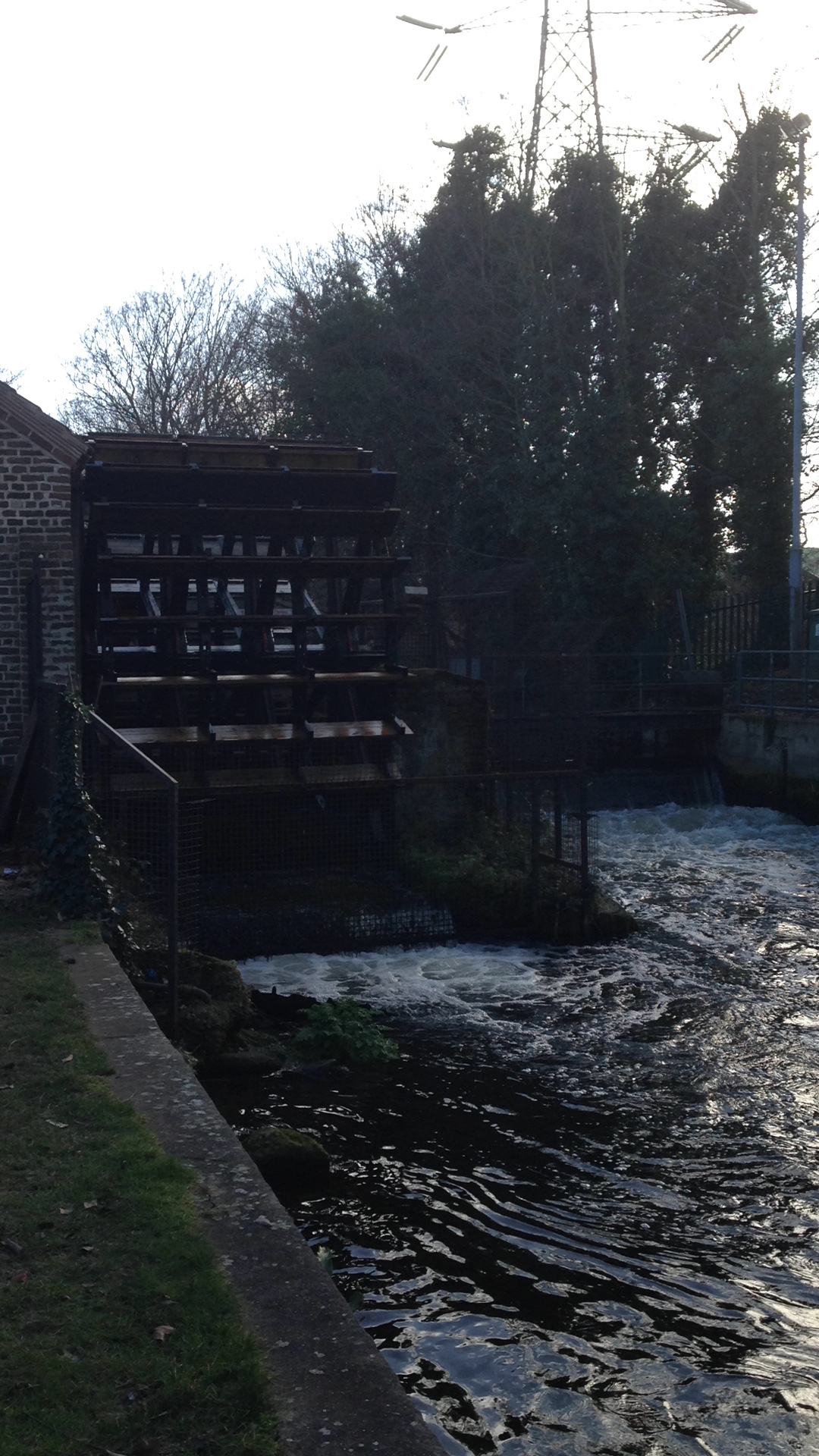
We decided to seated ourselves. The corner table near a door to the river looked empty and once seated, after pinching a chair from another table, I could see Abbey Mills eponymous waterwheel. At least the view looked lovely.

Sadly, last year’s Christmas lights still stayed strung round the room by masking tape. Available for functions, perhaps they were last night’s? It was still a pity, more because they highlighted the place’s poor paintwork. Must try harder, I thought. The worried waiter was certainly trying, hurrying by several times in five minutes.

Having done my homework, I thought I’d try the lamb shanks with mustard mash on one of the many blackboards after I checked what else was available on our missing menus when they arrived.

Eventually my eagle-eyed companion spotted a pile on the bar, hidden amongst glasses and preserve jars – possibly for last night’s candles? I have no answer for the ever-increasing pile of glasses. There were no restaurant blackboards for specials, they were by the door but I guess if you’d studied hard you wouldn’t need them. No cheating now.

Retrieving two, our original barman/waiter spotted him and yelled he’d be over soon but as his tone was the only snappy thing he possessed we waited  a lot longer. The worried waiter, almost as distressed as his black jeans, tried to tackle ten tables, plus help his boss/co-worker and the kitchen.

Another waitress/barmaid appeared at the restaurant’s far end but we never saw her again. Was she looking after the Family Area? We knew one existed having heard children and noting when entering, yet another blackboard above an empty door frame helpfully marking it. No clues to the door’s location, or why several still reasonably behaved children sat in the main restaurant.

Needing a nibble, we studied our menus seeing the selection of roasts at the top, just as the stressed server brought two sizable servings of roast chicken to the wrong table. He placed both on the bar and disappeared, while I reconsidered my choice.

As it approached 2pm, the promising Riverside Sunday Roast Menu confused us. Maybe we got extra marks working this out? Following Roasts, Start with… featured: soup of the day; bread; olives; and dips. Beneath, Bar bites… with: chips; onion rings; a strange gap; chips with truffle oil; then nachos. A long list of Mains… drifted into the next column.

Deciding to try chips with truffle oil, sea salt and Parmesan with our drinks, the brusque barman eventually arrived so we also ordered our meal, as we didn’t know when he’d return. We’d confused him and he grew increasingly impatient.

“No, chips and truffle oil to start, not as a side, with our drinks,” I explained slowly teaching him his menu.

“They’re not a side are they?” my friend asked.

As they never arrived, we never found out. Brusque barman, he never introduced himself, disappeared. The glasses grew higher. We weren’t alone in our irritation as other guests began to lose patience.

After over 15 minutes our drinks arrived. I had apple juice and my friend a cider. Just as well we didn’t want wine – we never saw a wine list. It’s a good thing we weren’t overly thirsty either, that was the only drink we were offered all afternoon.

I’ve looked online. The wine list is short but soundly stocked with reasonable prices. Again unnecessarily complicated, especially for staff, there are three glass sizes instead of just two. Were staff being tested too? From their faces it certainly seemed so.

Employing three clearly untrained waiters to cover over ten tables, another dining room and double as barmen is unrealistic. This is management’s responsibility and it’s greed not economy. Even without a more expensive restaurant manager, a relatively inexpensive weekend barman would solve most of this place’s problems promptly.

Over 30 minutes after sitting, starters appeared. We were famished. Rolls and butter would help a busy kitchen during what must be one of the Riverside’s busiest days.

I’d ordered soup of the day – meant to be mushroom it wasn’t. Containing a considerable quantity of mushrooms, the thick brown liquid surrounding them looked and tasted suspiciously of onion gravy. My friend, tasting it, agreed. I left over half.

His hummus, taramasalata and grilled bread was passable but hummus looked though it was left out uncovered overnight. It was merely mashed chickpeas: there wasn’t enough olive oil and no garlic kick. Taramasalata was tasty but too watery. When, eventually, our starters were cleared, no one asked how they were or why we’d left most of them.

20 minutes later the meaty mains arrived doing a detour to two vegetarians at an adjacent table, one of who wasn’t eating.

Plentiful portions seemed more because the chef tossed everything on the plates quickly. Yes it was pub fare but a little food presentation doesn’t hurt. Salt and pepper would have helped.

My “tender” lamb shank” was not. I cook these often, one reason I’d ordered it. Lamb should fall off the bone. This was overcooked and my suspicions about the onion gravy earlier were confirmed when I tasted what covered it. The mustard mash was lumpy and dry, with far too much mustard. The red cabbage OK, but I don’t really like red cabbage and it wasn’t mentioned.

My friend’s roast beef passed. Thankfully he likes his well done as he wasn’t asked how he liked it cooked. The roast potatoes were good but carrots overcooked too and despite the proclamation: “all roasts come with traditional trimmings”, there was no Yorkshire pudding. He ate his meat and potatoes leaving most of the rest eating some of my red cabbage, which he enjoys.

Not wanting dessert, at nearly 3.30pm we requested the bill, watching children now as restless as their poor parents starting to run around the restaurant. What’s the point of a Family Dining Area we wondered? An outside play area is difficult by a river but, if it features good fencing and used only with accompanying adults, it’s not impossible.

The vegetarian and her companion explained to the waiter/barman in jeans they needed to go soon. Apologising for the delay, he offered them a complimentary drink. Why weren’t we offered anything we wondered? In the bar area the TV came on for the football. I don’t mind football in pubs but if the restaurant plays music couldn’t the volume be off?

The bill, when it arrived, was reasonable. £42.05 after we’d deducted £3.50 for the missing chips with truffle oil. There was no service in every sense. By now we were keen to leave but our waiter, the snappy barman, asked if everything was OK.

“Not really,” I answered honestly but politely.

“Why?” he snapped back as if I’d insulted him personally.

Listing our grievances, my friend suggested they needed more staff.

“Ha!” he laughed, “Try telling my manager that!”

Our lesson was complete.

The William Morris Riverside

20 Watermill Way

London SW19 2RD

Ph: 020 8540 0216

Food served Monday to Saturday 12pm – 9pm Sunday

Lunch for two, without wine or desserts £42 without service

Rating: 2 out of 5

Rick Stein’s Down Under discoveries are deliciously different.

rick_stein01

Photo: Creative Commons

Rick Stein (Photo: Thomas Ridley Foodservice via Creative Commons)

BBC2’s A Cook Abroad: Rick Stein’s Australia featured culinary curiosities surprising even this gourmet Aussie expat…

Visiting my Australian home for the first time in five years last Christmas, last night I returned, watching celebrity chef Rick Stein’s episode of BBC2’s: A Cook Abroad: Rick Stein’s Australia.

Viewers were taken on a tasty tour through Aussie cuisine’s past and future, usefully utilising Stein’s 30-year association with the country. Visiting the Sydney digs where his cooking aspirations began, he showed how a nation formerly famous for burnt “snags on the barbie”, now served sophisticated mouth-watering meals, rivalling restaurants worldwide.

Even meat pies, my own school canteen childhood favourite, had grown up. Once soggy pastry cases holding little but gravy, these were now filled with exotic meats like kangaroo.

Considerable time was spent showcasing the country’s fish and seafood but considering this is Stein’s forté and Australia, the world’s largest island, this was understandable.

What lifted the programme, making it so fascinating, was contrast – the continent’s evolution from culinary backwater to producing foods for the future. Interesting ingredients from exotic meats to native herbs, fruit and vegetables, that Aboriginals cooked with for millennia and local chefs proudly proclaimed were the next big foodie fad.

Tasmania, formerly Australia’s Isle of Man, was the new gourmet-go-to. Although its cool climate has produced world-class wine for some time it was, until recently, seen as little more than a hippie-hideaway by mainlanders. On my last visit I’d heard surprising rumours through friends and family of the Island State’s new restaurant reputation.

Jumping from “Tassy” to nearby Bruny Island, Stein met a pig farmer turned wallaby hunter. This metre high mammal resembling a small kangaroo is now in high demand for its tasty flesh. Shy, nowhere near as common, the kangaroo’s cute compact cousin is protected on mainland Oz.

On Bruny Island, off Tasmania’s coast, an estimated 10 million wallabies thrive, decimating crops. Stein accompanied him on a night-hunt to shoot a fresh victim, then watched him prepare fresh “free-range native bush meat” and one killed earlier, left to hang. Due to its high muscle content wallaby meat is tough. It looked delicious and Stein stuffed it down. This was not a show to watch while hungry.

The foods’ diversity plus Stein’s hosting, although his cheeky-chappy routine can often grate, were excellent. Pigs wandered around the hunter’s farm, hinting at the past but this show focused firmly on Australia’s food future. Avoiding the clichés often seen on many Australian-themed programmes, even the music was understated – not a didgeridoo was heard. Featuring fascinating facts, it was tasty television in every sense.

Returning to mainland Tasmania, next stop was a distillery due to its superb single malt: the world’s best. Scottish viewers probably switched off at this point but, Tasmania’s Scottish cool climate, lakes and mountains, helpfully highlighted, it rang true. A single malt, lover myself I hungered to go but 70 per cent proof and, astonishingly, £20 thousand a bottle, this was sadly outside my budget.

Inland fish farms further highlighted Australian food’s ethical environmental emphasis. Who knew Japanese sushi chefs prized Tasmanian salmon more highly than any other?

Stein almost went too far during a corny dash delivering fresh salmon to the renowned Japanese sushi chef resident in a sleepy Tasmanian backwater. But the mouth-watering morsels the sushi chef prepared and his sublime knife wielding skill made up for it, demonstrating why people travel from everywhere to eat there. As Stein said: “Tasmania’s hidden secrets need advertising.”

Watching this I wanted to go and suspect I wasn’t alone.

25 per cent of global abalone, one shellfish I’ve never tasted, is Tasmanian, 75 per cent sent to China. Renowned in Melbourne and Sydney, it’s not familiar across most of the mainland. A slow-growing mushroom-like mollusc, if cooked incorrectly this delicacy tastes like “boot leather.”

A fisherman cooked his in ghee aboard his boat, serving it with one of Tasmania’s famous Chardonnays. Stein devoured it, dubbing it: “The best seafood Australia isn’t eating.”

Delicious TV – this was the BBC at its best. Stirring renewed patriotism within me, I loved the environmental emphasis, especially considering Australia’s current Government, refuses to acknowledge climate change. Timely, tasty, it captured Australian character, and potential, perfectly.